






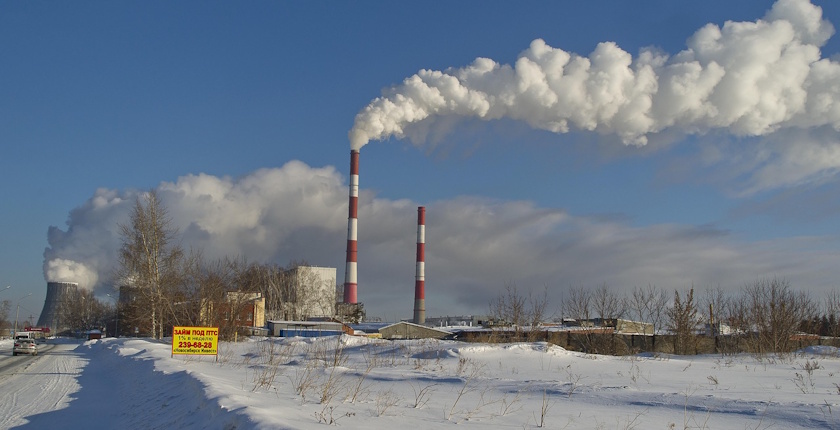
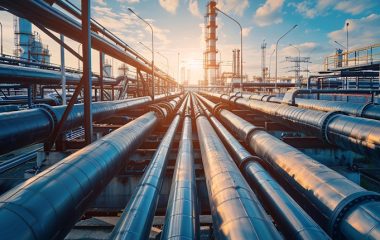
Photo: Анатолий Стафичук from Pixabay


A feasibility study for gas power plants in Montenegro has shown that using natural gas for electricity generation is a cost-effective option.
State-owned power utility Elektroprivreda Crne Gore (EPCG) officially received a feasibility study for gas power plants in Montenegro. The document covered the possibility of building facilities with capacities of 50 MW to 400 MW at several locations – Bar, Podgorica, Pljevlja, and Nikšić, the company told Vijesti.
In December 2021, EPCG launched the process for the selection of a consultant that would outline technical solutions and develop a preliminary feasibility study. The contract was awarded in July 2022 to SS&A Power Consultancy from Switzerland.
Three options for gas power plants
In the tender documentation, the company has revealed its plans to build three gas power plants.
One would be a hybrid power plant with a capacity of at least 50 MW near the city of Bar, including a gas turbine and with a possibility to use renewable sources. Another possible project would be for a combined gas power plant of at least 150 MW within the now defunct KAP aluminium smelter in Podgorica, also with a potential to utilize renewables. The third gas power plant, with a capacity of up to 200 MW, was envisaged to be installed in the town of Pljevlja.
All the considered options are technically feasible and economically viable, according to the study.
Depending on the capacity of the plant and the source of the gas supply, investments are estimated in the range of EUR 233 to EUR 362 million. This assessment is for a minimum plant capacity of 150 MW and a maximum of 400 MW.
Four potential locations
The study includes a preliminary analysis of gas plants with capacities of 50 MWe, 75 MWe, 150 MWe, 200 MWe and 400 MWe at the four locations. Its authors proposed technical solutions based on the most advanced gas turbines.
They examined various options for securing natural gas: from potential offshore gas fields in Montenegro and importing gas through Serbia to a liquefied natural gas (LNG) terminal in the Port of Bar and a connection to the Adriatic-Ionian gas pipeline. EPCG explained that the further development of the project primarily depends on ensuring a stable source of gas.
However, the decisions will also be made in cooperation with the government and the Ministry of Energy and Mining in the context of the broader national energy strategy and the recently signed memorandum of cooperation with the Japanese company JERA.
Natural gas as an option to replace coal
A memorandum of understanding was signed last year for the development of projects for an LNG terminal and gas power plant as well as for studies for these projects.
The idea about a gas power plant and LNG terminal emerged in 2021 as a replacement for the Pljevlja coal-fired power plant.
In December of 2021, EPCG signed an MoU with the LNG Alliance, and the Port of Bar took a similar step six months later. In July 2023, the Government of Montenegro signed a MoU with companies Enerflex Energy Systems and Wethington Energy Innovation from the United States.

Be the first one to comment on this article.