







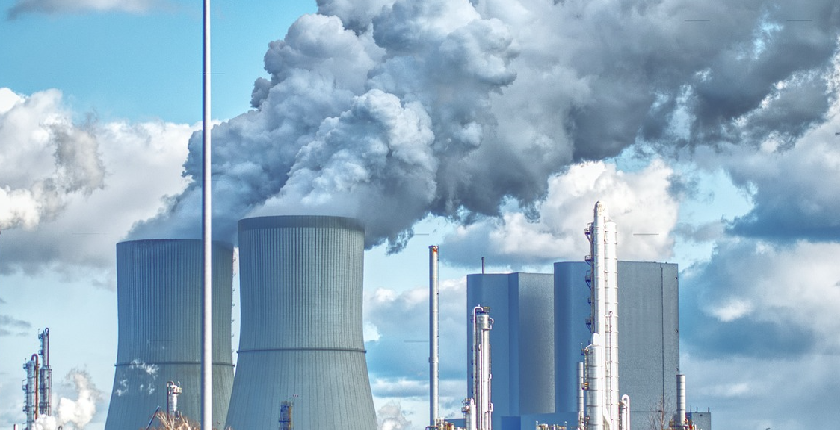
Photo: Bna55 on Pixabay


Carbon capture and storage (CCS) is a new technology that may allow industries to reduce their CO2 footprint without the need for investments in alternative fuels or renewable energy.
Many countries and companies are currently looking into kickstarting the new and promising sector, although the cost of capturing CO2 is still high and needs to be reduced through economies of scale and innovation, similar to what happened with wind and solar energy in the past.
In its revised Integrated National Energy and Climate Plan (NECP), Italy set a goal to sequester 3.6 million tonnes of CO2 annually and store it in underground sites, such as depleted hydrocarbon reservoirs in the Adriatic Sea.
Apart from its national goal, earlier this year Italy also presented to the European Commission a CCS initiative with Greece and France. The three countries aim to create the first CCS infrastructure and exports between them. More countries could participate in order to increase CCS capabilities in the wider Mediterranean region.
Prinos to receive Italian CO2
The Italian plan is to export some of its CO2 to Greece and store it in the depleted Prinos hydrocarbon reservoir, offshore Kavala.
This storage site is being developed by Energean and is expected to have a capacity of 500,000 to one million tonnes of CO2. The EUR 1 billion project has been included in the EU’s Recovery and Resilience Facility (RRF) and a proposal for its inclusion in the EU Innovation Fund has also been submitted.
Energean: The site will be ready in three years
Earlier this year, Energean’s Vice Chairman Constantine Nikolaou said Halliburton and Wood have completed the studies. The investment can become operational within three years, he claimed at the time.
The Italian NECP states that the first CO2 exports to Greece may begin during the first half of 2030.


Be the first one to comment on this article.