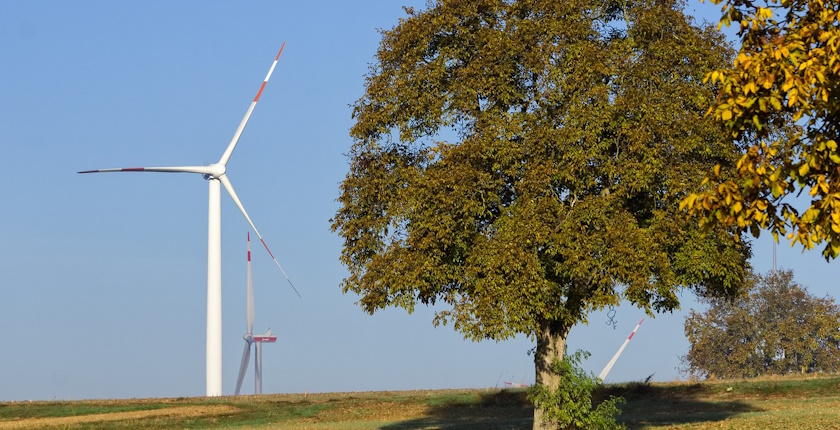




The bill on renewables adopted by the government in Zagreb will lead to important regulatory changes, resulting in a comprehensive reshuffle of rules in this field, said Bojan Reščec, the country manager for Croatia of Austrian privately-held power producer RP Global, SeeNews reported. „I believe that the new regulations were drafted in cooperation with experienced professionals, who went through all the available options and proposed the best solutions within the new bill,” he said in an emailed response to a SeeNews inquiry.
Draft Law on Renewable Energy Sources and Highly Efficient Cogeneration was adopted in early September at a government session in a bid to unify and harmonize regulations in the sector in order to boost the production and use of renewable energy in the country as well as to fully align domestic rules to EU law, among other goals. The bill provides the regulatory framework to plan and incentivize the development of the production of electricity produced at plants using renewable energy sources and highly efficient cogeneration while offering greater security to investors in renewables, the government said.
Reščec added that having in mind the circumstances, at the moment he does not see better solutions for the sector than the ones contained in the bill. Among the most significant changes he singled out two important competitive procedures that all the potential investors will have to go through before investing in projects for renewable sources – to obtain land lease agreements, either easement or building rights, and for ‘market premium’, as well as the introduction of an eco-balance group. However, Reščec cautioned that, although the bill is a step in the right direction, it remains to be seen whether it will be implemented properly as a number of key by-laws need to be adopted in order for the new framework to be fully effective.
Talking about Croatia as a destination for investments in green energy, the official said that the signals that the government in Zagreb has been sending over the past three years were somewhat conflicting when it came to their vision for the future of renewables. „The adoption of the new regulations is a significant and necessary milestone in that sense. Whether it is good or bad, the actual implementation of the bill will show. I believe and hope that it will prove to be good, but that it will readily adapt to any potential external changes in EU legislation if that becomes necessary, as nowadays we are witnessing frequent and significant changes in renewable energy sources’ regulations in Europe,” Reščec said.
The situation in the wider region of Southeast Europe is no better than in Croatia and RP Global has been investing during the past few months in Chile, Peru and Georgia, creating a counterbalance for its European projects, although the company would gladly invest more in Croatia if that turns out to be profitable, the official said. RP Global Group hopes it will be able to commission by November its 34.2 MW Rudine wind park near the Adriatic town of Dubrovnik. Rudine is the second wind project developed by RP Global in Croatia. The 43.7 MW Danilo wind farm, near Šibenik, was commissioned in 2014.