








Photo: Freepik


A new report from the International Energy Agency (IEA) shows that the rate of employment growth in the energy sector was two times higher in 2024 than in the overall global economy. On the other hand, the organization is warning of a serious shortage of skilled workers in key sectors. Renewable energy sources, especially solar power, and the broader process of electrification play a key role in the expansion.
The energy sector employed 76 million people last year, according to the IEA’s World Energy Employment 2025 report. Investments in energy infrastructure contributed to employment growth, which came in at 2.2%, nearly double the global 1.3% rate.
The shift toward electrification is significantly transforming the structure of the workforce. It has led to the electricity sector surpassing the fuel supply sector in employment for the first time.
The number of people working in electricity generation, transmission, distribution, and storage has increased by 3.9 million over the previous five years, reaching 22.6 million—representing nearly three-quarters of all new jobs created in the energy sector.
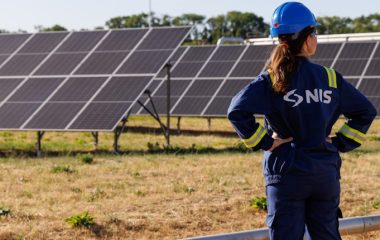
Renewable energy sources, particularly solar power, are the strongest drivers of job creation. Solar alone accounts for 50% of all new power sector jobs since 2019. Last year, solar employment grew by 310,000, almost half of global power generation job growth. The total number of solar jobs is estimated at five million.
Nuclear power, grid expansion, and energy storage collectively accounted for one quarter of new energy sector jobs since 2019, despite challenges such as rising component costs and shortages of skilled labor, the report notes.
Wind sector stagnates
Employment in the wind sector grew by 3% in 2024, reaching 1.7 million jobs, compared to a compound annual growth rate of 5% over the previous five years. Rising procurement costs and declining government subsidies have slowed project development and delayed new investments, according to the latest data.
The slowdown is most visible in manufacturing, where employment fell by 6% due to reduced demand for new turbines and components as projects were delayed or cancelled.
Investors in offshore wind have significantly scaled back investment plans in response to rising project costs. Europe recorded the largest decline in offshore wind employment last year, with a 4% drop.
The automotive sector also recorded solid growth last year, driven by an increase in jobs related to electric vehicles (EVs) and batteries.
Oil and gas employment returns to 2020 levels
Employment in coal supply has fallen by 20% in advanced economies since 2019, but due to expansion in India, China, and Indonesia, global coal employment increased by 8%.
The report also notes that the number of workers in the oil and gas supply has returned to 2020 levels. “However, it now appears that many firms are entering a new period of retrenchment in the face of lower oil prices and revenues, with a number of major oil companies announcing job cuts in 2025,” the report states.
Shortage of skilled labour deepens
Despite job growth, the report highlights an acute shortage of skilled labour. Applied technical occupations—including electricians, pipefitters, lineworkers, plant operators, and nuclear engineers—are in particularly short supply.
In the IEA’s Energy Employment Survey, 60% of companies reported labour shortages. This bottleneck threatens countries’ ability to maintain energy security, expand grids, scale clean energy manufacturing, refurbish nuclear power plants, and attract investments.
The number of graduates with energy-relevant training is not keeping pace with rising demand. According to the report, to prevent further skill misalignment by 2030, the number of graduates entering the energy sector would need to increase globally by around 40%. Expanding training capacity to this level would cost an estimated USD 2.6 billion annually.
Limited impact of artificial intelligence
Companies are increasingly turning to workers from related industries and reskilling programs to fill labour gaps. Although 50% of surveyed fossil fuel workers said they would remain in the energy sector if alternative employment existed, not all workers have equal opportunities for retraining.
The report also examines the role of artificial intelligence. While AI brings benefits, its impact remains limited, as it cannot reduce the demand for manual technical labour—precisely the occupations in shortest supply.
Policy interventions can significantly influence the ability to attract new workers into the energy sector. According to the IEA, the biggest barriers to entering training programs include high costs, income loss during training, and limited awareness of available programs. Effective measures include targeted financial incentives, expanded vocational programs, greater industry involvement in curriculum development, and investments in training centres, while reskilling within the sector remains essential.
Working conditions also play an important role. Pay, job security, and a safe work environment are the most important factors for workers, the report shows, and these issues are increasingly at the centre of social dialogue.


Be the first one to comment on this article.