







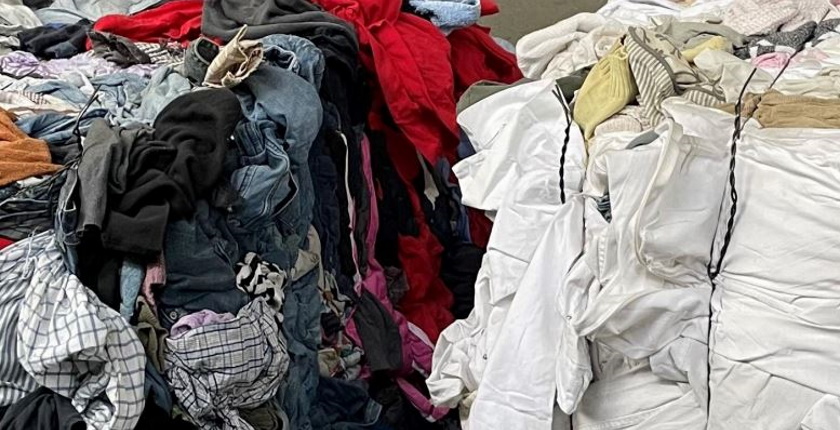
Photo: EEA


The European Union has tripled its exports of used clothing and footwear, indicating the scope of its issue with such waste. The items are largely exported to Asia and Africa, and they often end up in landfills, according to the European Environment Agency (EEA).
EEA has warned in a briefing of the issues caused by exporting discarded textiles including used clothing and footwear. Europe faces major challenges in the management of used textiles, which need to start being collected separately in the European Union by 2025, it recalled.
Textiles are, on average, the fourth-highest source of pressure on the environment and climate change from a European consumption perspective, according to EEA’s previous briefings.
The capacities for reusing and recycling textiles in Europe are limited
The agency noted that the capacities for reusing and recycling the said waste category in Europe are limited, adding that a large share of discarded and donated clothing and other textile products are exported to Africa and Asia.
The annual amount of used textiles exported from the EU has increased from slightly over 550,000 tons in 2000 to almost 1.7 million tons in 2019, the briefing ‘EU exports of used textiles in Europe’s circular economy’ reads.
Once they are exported, the fate of used textiles is often uncertain
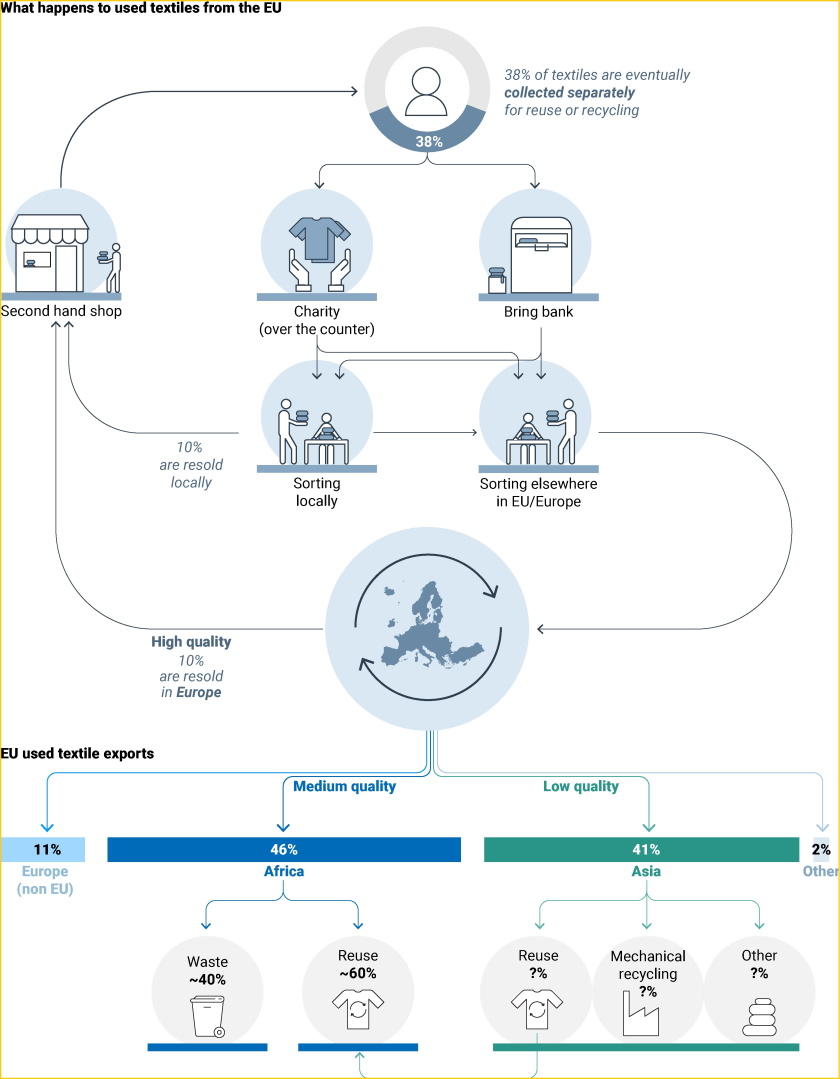
EEA noted that the common public perception of used clothing donations as generous gifts to people in need does not fully match reality. Its data showed that in 2019, 46% of used textiles were exported to Africa, primarily for local reuse as there is a demand for cheap, used clothes from Europe.
But what is not fit for reuse mostly ends up in open landfills and informal waste streams, according to the briefing, which looks at the patterns of and trends in the segment.
In 2019, 41% of used textiles exported from the EU went to Asia. Most are directed to dedicated economic zones where they are sorted and processed. The used textiles are then mostly downcycled into industrial rags or filling, or re-exported for recycling in other Asian countries or for reuse in Africa.
Textiles that cannot be recycled or re-exported likely end up in landfills, the briefing reads.




Dear Mr Spasić,
What solution do you suggest for clothes and related items that won’t be taken by charity shops or be sold in 2nd hand shops for consumers who cannot afford much more durable and superbly-made goods?
Please let me know. I would like to be able to not contribute to the world’s mess. Is it more government and state involvement? Nudging from them yes, but full intervention, I don’t know? Best wishes,
Dear, maybe the solution is recycling.