


State power utility Elektroprivreda Srbije (EPS) intends to shut down 10 coal power units, with a total capacity of 1,094 MW, between 2025 and 2035, according to the company’s Go Green Road plan.
The shutdown of the 11 units will end the operation of thermal power plants Morava, Kolubara A and Kostolac A, while TE Nikola Tesla A (TENT A) will continue to operate at reduced capacity. This means that by 2035, EPS will reduce the total capacity of existing thermal power plants, which account for two thirds of domestic electricity production, from 5,171 MW to 4,077 MW. However, in the meantime, a third unit at Kostolac B, with a capacity of 350 MW, will come online, bringing the total capacity to 4,427 MW.
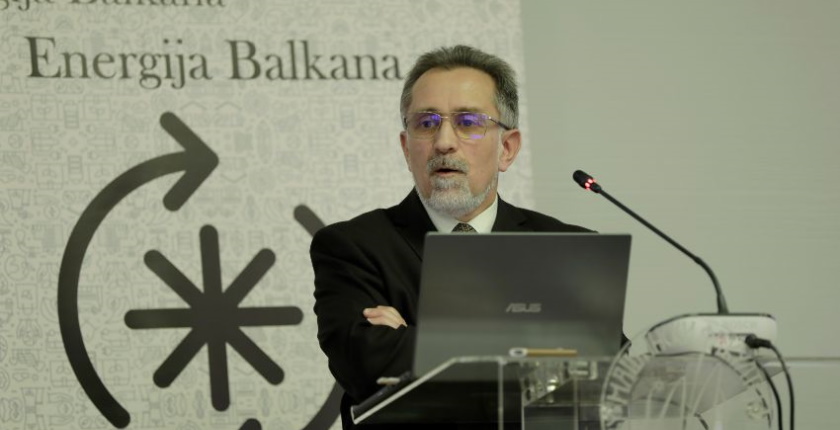
The shutdown plan was presented by Vladimir Šiljkut, adviser to the EPS director, at a conference organized by the Energija Balkana website. Šiljkut noted that coal should ensure Serbia’s energy security and play a role in the green transition.
Thermal power plants Morava and Kolubara A will be shut down first
In all scenarios analyzed under the Go Green Road plan, the use of coal is reduced, he added.
Šiljkut said that Morava and Kolubara A will be shut down by the end of 2024, TENT A1 and TENT A2 by the end of 2027, and Kostolac A1 and A2 by the end of 2028.
These power plants have the following capacity: TE Morava (one unit) 125 MW, TE Kolubara A (five units) 239 MW, TENT A1 210 MW, TENT A2 210 MW, and Kostolac A (two units) 310 MW – putting their combined capacity at 1,094 MW.
The planned shutdown will reduce CO2 emissions factor from 0.86 tons in 2019 to 0.51 tons in 2035, he said.
CO2 emissions are expected to drop from 0.86 tons in 2019 to 0.51 tons in 2035
Šiljkut noted that the Go Green Road plan envisages EUR 8.5 billion in investment, of which EUR 2.2 billion in the reconstruction of electricity and coal production capacities, EUR 5.8 billion in the construction of new facilities, and EUR 500 million in environmental protection. EPS also plans to invest EUR 4.8 billion in renewable energy sources.
Of note, the plans for the closure of coal power plants Morava and Kolubara A were announced in 2017. Six units in these power plants are within the opt-out mechanism, which implies limited working hours.
At a coal storage site, a slag landfill and ash dumps within the complexes of thermal power plants Morava and Kolubara A. EPS has already begun developing the projects of solar power plants, but there is also an idea to convert Morava to natural gas.