


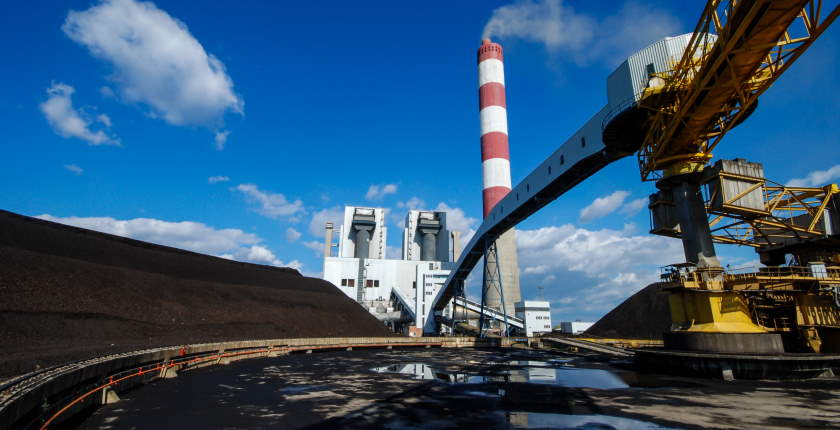
The site for the installation and maintenance of equipment for coal mine Radljevo and the bypass road around the facility will be completed by New Year, and afterwards the exploitation of the coal will start in a very short time, said Milorad Grčić, director of power utility Elektroprivreda Srbije (EPS), adding no one should be worried that the production of electricity from coal would be reduced due to the introduction of green energy.
Radljevo is one of the new mines in the Kolubara coal basin, planned to supply new thermal power plant Kostolac B3, whose construction has already begun, as well as Kolubara B, whose construction is in the pipeline. It could also serve as a replacement for depleted mines. Estimated coal reserves are around 350 million tons.
Two days ago, the Government of Serbia adopted a bill on renewable energy with the aim to boost the use of green energy in the country.
Coal from the Radljevo mine is intended for new thermal power plants
Grčić said every investment that enables the extension of the life cycle of any production capacity is very important for EPS, because the Kolubara coal basin is a pillar of electricity supply, local media reported.
Coal provides stability to electricity production in Serbia
He also said that no one should worry that the amount of electricity Serbia produces from coal would be reduced due to the introduction of renewables. Coal gives stability in the production of electricity in Serbia.
“Electricity production from coal will remain at the same level as now. We will only increase capacities in renewable energy sources, so the percentage of total coal production will be lower, but the amount of coal and electricity from it will remain the same,” Grčić explained.
Coal will be excavated for a long time in the municipalities of Ub and Lazarevac
Miodrag Ranković, president of the Kolubara trade union, said Radljevo is the future of the mining sector.
“All this provides assurance that coal will be excavated for a long time on the territory of municipalities of Ub and Lazarevac, and Radljevo is quite important, because it will replace our older mines,” he stated.
The Radljevo mine is a response to lobbyists who would like to move the switch to another state
He added that the opening of the Radljevo mine is the answer to all lobbyists who say that coal will no longer be excavated.
“There have always been lobbyists that want to move the switch to another state, to enslave us from that side, but with this kind of state leadership it will not happen,” Ranković said.