






Photo: Energy Community


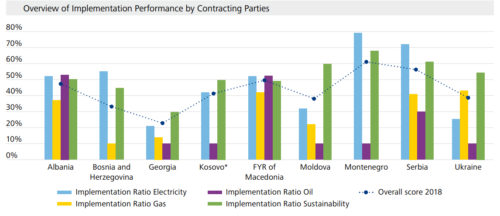
The Energy Community (EnC) Secretariat’s Annual Implementation Report concludes that the average implementation score of the Contracting Parties is at around 43%, and underlines the need of finishing this first transition, from foreclosed energy sectors to regionally integrated markets, in order to be successful in the second, green energy transition, which is currently transforming the EU and the world.
The report, covering the period from September 2017 to September 2018, reveals that Montenegro and Serbia remain the frontrunners in terms of implementation performance, while former Yugoslav Republic of Macedonia has leapfrogged into third place. Albania and Kosovo* score in the middle.
Moldova, Ukraine, and Bosnia and Herzegovina are the laggards, with the latter having the weakest implementation record out of the three. Georgia has the lowest implementation mark but is performing well considering that the majority of transposition deadlines are yet to expire.
For the third year in a row, the focus remained on the implementation of the Third Energy Package. In May 2018, FYR Macedonia joined the other seven Contracting Parties which have already transposed the Third Package.
Change in paradigm from market liberalization to decarbonization
The EnC Secretariat names the energy transition currently transforming Europe and the rest of the world as the EnC’s second transition. The first was meant to be a transition from foreclosed, post-socialist energy sectors in each Contracting Party to open and regionally integrated energy markets.
“With a change in paradigm from market liberalization to decarbonization, is it also time for a radical change of course for the EnC? Or in other terms: can we jump over one transition and go right into the next one, with a good chance of success? The answer is no,” the report reads.
The Secretariat believes that successfully completing the first energy transition is important to enable a level playing field between Contracting Parties and EU Member States.
The Secretariat notes that the amendments to the EnC Treaty still under discussion are sine qua non for reaching that level playing field, but will not be sufficient in themselves, the reports finds.
The most severe challenge is what comes after coal
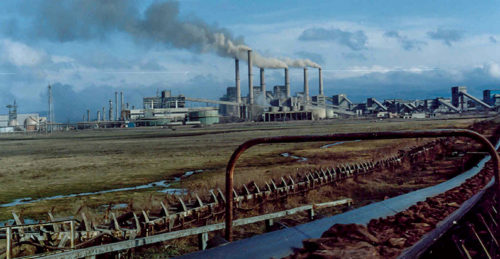
According to the report, maybe the most severe challenge for many Contracting Parties is the question of what comes after coal. This question has been on the table most recently with the entry into force of the Large Combustion Plants Directive (LCPD) for existing power plants, and the Industrial Emissions Directive (IED) for new ones. With the LCPD the environmental part of the EnC acquis has taken center stage.
The report underlines that it is one thing to campaign for their closure and against new ones, but what is to replace them and provide the necessary back-up energy to balance an increased share of intermittent renewable energy is less obvious.
There is no one-size-fits-all answer to the problem, it depends again on whether or not the first energy transition has been completed, the report reads.
The environmental part of the existing EnC acquis will have to play a greater role in the future, for example, the Environmental Impact Assessment Directive, needs to be applied for coal and renewables projects alike, and the LCPD needs to be effectively monitored and if necessary enforced by regulatory authorities.
The report features chapters on electricity, gas, oil, infrastructure, national regulatory authorities, renewable energy, energy efficiency, environment, climate, competition, and statistics.
Be the first one to comment on this article.