







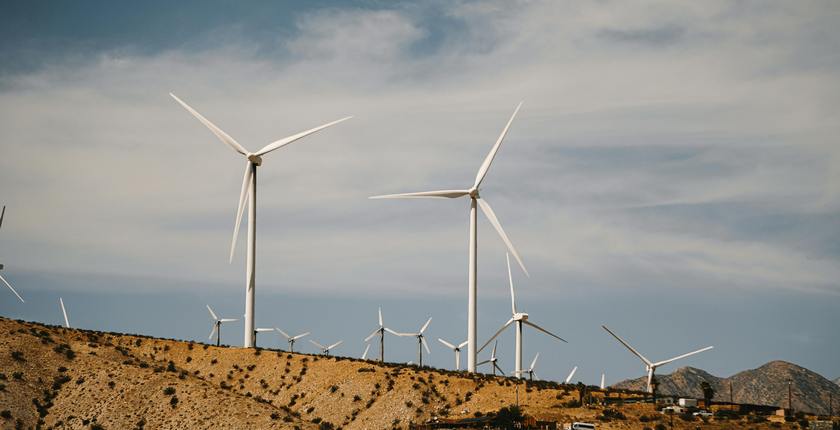
Photo: Pexels


Share


Share
The Government of the Republic of Srpska has drafted a cooperation agreement with Croatian firm Kermas Energija, which is expected to enable the awarding of a concession to build and operate the Trusina wind farm. In late November, the government adopted a decision to annul the public call for awarding the concession, launched in October, due to a lack of bids.
A concession agreement for the 50 MW Trusina wind farm in the municipality of Nevesinje was signed in 2012. However, it was terminated in 2019 after Kermas failed to provide a bank guarantee or make significant progress in implementing the project. The agreement was signed with Eol prvi, a firm owned by Serbia-based Omega plus, but Kermas later acquired a majority stake in the project.
In a statement to Nezavisne, the Ministry of Energy and Mining of the Republic of Srpska explained that the decision to conclude an agreement with Kermas was made in order to avoid arbitration proceedings that the Croatian company had planned to initiate, as well as due to the government’s interest in having a wind farm built at the site.
According to earlier reports, Kermas had planned to seek damages in the amount of BAM 200 million (around EUR 102.3 million).
The concession is expected to be awarded through a negotiated procedure
The agreement is intended to enable the concession to be awarded through a negotiated procedure, in accordance with the Law on Concessions, the newspaper reported.
Besides withdrawing from arbitration, Kermas would also have to implement the project under new technical specifications, as technology has advanced in the meantime, and wind turbines are now produced with significantly higher installed capacities, according to the Government of the Republic of Srpska, one of the two entities constituting Bosnia and Herzegovina.
According to the annulled public call, the estimated investment in the Trusina wind farm was BAM 130 million (EUR 66.5 million), with a projected annual electricity output of around 160 GWh.
The concession was to be awarded for a period of up to 50 years, and the electricity produced would have been sold on the market.


Be the first one to comment on this article.