






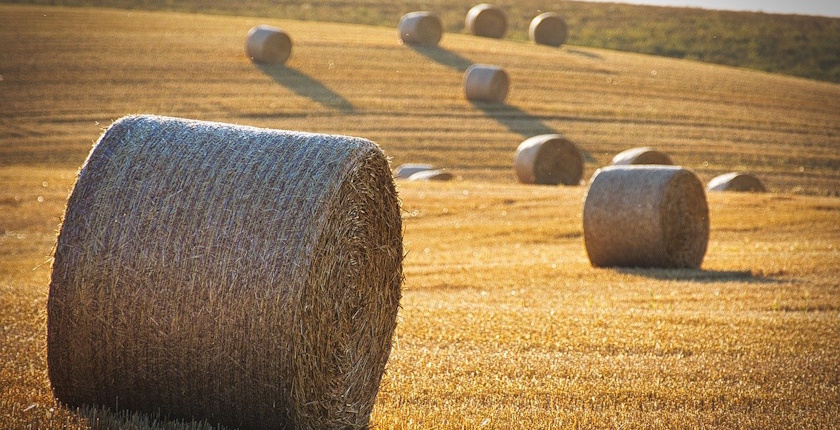
Photo: Rainer from Pixabay


The Government of Croatia has adopted the Draft Bioeconomy Strategy until 2035, which foresees investments of EUR 200 million.
The draft bioeconomy strategy until 2035 will provide a strategic planning framework for intensive sector development and contribute to the economic and social development of the country, according to the Government of Croatia.
The strategy defines the bioeconomy as all sectors and systems that rely on biological resources – animals, plants, microorganisms, and biomass from these sources, including organic waste.
The sectors of agriculture, forestry, fisheries, aquaculture, and the production of food, beverages, and tobacco are fully included in the bioeconomy, the document reads.
Of note, back in 2018 the European Commission has put forward an action plan to develop a sustainable and circular bioeconomy.
The strategy has two goals
Deputy Prime Minister and Minister of Agriculture, Forestry, and Fisheries David Vlajčić pointed out that the strategy defines the vision for the development of the bioeconomy. It will be achieved by 2035 through interventions, strategic projects, and activities, he explained.
The strategy has two strategic goals – the development of sustainable production and raw material markets and the increase of added value in the bioeconomy, the government said.
The achievement of the strategic goals will be financed by funds from European financial programs, co-financed by the state budget, Vlajčić added.
According to the minister, EUR 199 million is envisaged for the implementation of the strategy for the period from 2025 to 2027. For the period from 2028 to 2035, the financial framework would be defined later.
The draft envisages the construction of biomass distribution centers
To achieve the strategic goals, various mechanisms would be used, Vlajčić stressed.
These include the construction of biomass distribution centers, regulating the use of waste sludge, encouraging the construction and modernization of capacities in bioeconomy sectors, promoting the production of packaging from recycled materials, bio-based and biodegradable plastics, and conducting research and innovation related to the bioeconomy.
The strategy should also increase the utilization of by-products, residues, and waste from production and processing in the agriculture, forestry, and fisheries sectors and stimulate the biomass market.
The government adopted a decision on October 13 to initiate the development of the bioeconomy strategy by 2035. The Ministry of Agriculture, the Ministry of Economy and Sustainable Development, the Ministry of Science and Education, and the Ministry of Regional Development and European Union Funds have cooperated in the production of the draft.

Be the first one to comment on this article.