


Credit Agricole Serbia has signed a EUR 25 million loan agreement with KfW bank to finance projects in energy efficiency and renewable energy sources.
Entrepreneurs, small and medium-sized businesses as well as agricultural producers will have the opportunity to get grants and free assistance from technical consultants who assess the feasibility and cost effectiveness of the project, Credit Agricole Serbia said on its website.
Projects eligible for funding are for primary energy savings of at least 20% or a reduction of CO2 emissions of at least 20%
The agreement is a continuation of cooperation with KfW, under which the two lenders fund projects with primary energy savings of at least 20% or a CO2 reduction of at least 20%, Credit Agricole Serbia told Balkan Green Energy News.
The client can receive a 10% grant from the value of the project
The client is entitled to a 10% grant for RES projects, or 5%-10% for other projects, depending on the results of the energy efficiency measures.
Entrepreneurs, cooperatives, registered agricultural producers with active status and legal entities with up to 250 employees and an annual turnover of up to EUR 50 million, based on consolidated financial results, are eligible for grants, Credit Agricole Serbia said.
The maximum repayment schedule is seven years, with a grace period of up to 12 months
The loans for clients will have the maximum repayment schedule of seven years, with a grace period of up to 12 months. The maximum loan amount is EUR 1 million for energy efficiency projects and EUR 3 million for RES projects.
The KfW requirements must be met in order to receive the grant
In order to get a loan, it is necessary for the client to contact the bank and apply for financing.
If the investment involves replacing existing equipment with energy-efficient gear, the documentation for the purchase and for the used equipment must be provided to determine whether the replacement provides a reduction of CO2 emissions or a reduction of primary energy consumption of at least 20%.
The funds can be used for new machinery, equipment, vehicles
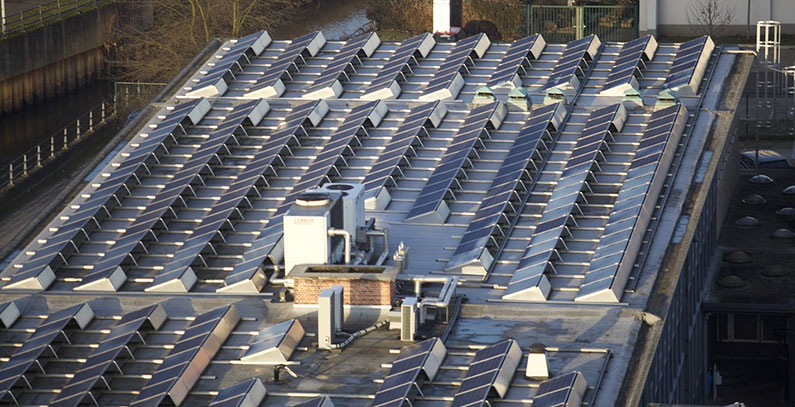
The funds can be spent on new machinery, equipment (biomass boilers, biomass dryers, solar panels, refrigerator compressors, incubator stations) and vehicles for business purposes, Credit Agricole Serbia explains.
After the investment is implemented, the KfW consultants evaluate the project
If the investment is for RES (biogas and solar power plants) or other efficiency measures (insulation for buildings, lighting replacement, heating system reconstruction), the client needs to to submit a business plan. It will be used to determine if the investment secures a reduction of CO2 emissions or a reduction of primary energy consumption of at least 20%.
After the investment is implemented, KfW consultants perform a project evaluation and confirm whether it is in accordance with its conditions, after which the client gets the grant, according to Credit Agricole Serbia.