


Despite receiving an official notification that Germany is withdrawing financing for the Hrgud wind farm, Elektroprivreda Republike Srpske (ERS) is not giving up on the project. The Republic of Srpska’s public power utility claims that other interested foreign investors have already emerged, including from China.
The German government earlier decided to halt Hrgud and three other infrastructure projects in the Republic of Srpska, worth a total of EUR 105 million, citing “separatist aspirations” of the Republic of Srpska and its president, Milorad Dodik.
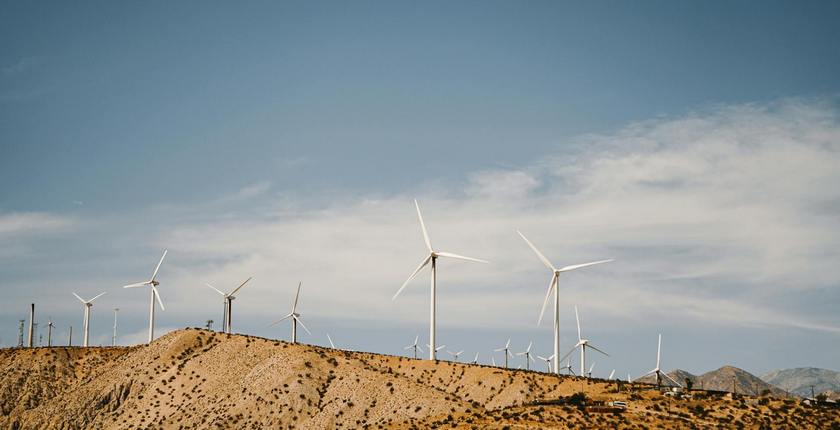
The projected installed capacity of wind farm Hrgud, with 16 turbines, is 48 MW, while its average annual output would be 126 GWh of electricity. Germany’s KfW Development Bank was supposed to disburse a EUR 60 million loan for the project, while the rest of the funding, some EUR 4 million, was to be provided by ERS.
Vlatković: ERS will have no problem financing wind and solar projects
“The German development bank has exited the loan arrangement, so as of today we can officially work on the Hrgud wind farm project independently. We no longer have any obligations towards our German partners,” Jovica Vlatković, executive director for investments and development at ERS, told ATV.
Vlatković claims that ERS would not have any problems regarding the financing of any wind farm or solar power plant project.
When Germany’s withdrawal was first announced, Milorad Dodik said he would seek financing for the Hrgud project from China.
Talks with Chinese delegation already underway
As soon as the Germans pulled out, numerous foreign investors came forward, and the company has already been visited by a Chinese delegation, said ERS spokeswoman Ana Bokonjić Buha. It expressed interest in investing in renewable energy projects with an emphasis on wind power plants, specifically the Hrgud wind farm, she added.
“Certain discussions have started, and we hope for a positive outcome,” Bokonjić Buha said. The utility held a meeting last week with the representatives of China-based Zhongbo Group and GAEA.
Speaking about cooperation with foreign investors on other projects, she recalled that the construction of the 160 MW hydropower plant Dabar is underway, with China Gezhouba Group as the contractor. Also, work has begun on the 37.3 MW hydropower plant Mrsovo, which is being built by Turkish contractor NGA, she asserted.