







Photo: iStock


Bulgaria’s Electricity System Operator has received applications for the connection of batteries with 12 GW in total capability, according to the transmission system operator’s Executive Director Angelin Tsachev.
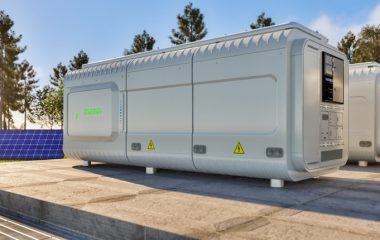
Bulgaria currently has 500 MW in battery energy storage systems (BESS), with a capacity of 1,300 MWh. The facilities are in private ownership.
Angelin Tsachev told Bulgarian National Radio that the Electricity System Operator (ESO) received applications for about 12,000 MW, with a capacity of 35,000 MWh.
The TSO’s technical council has considered each grid connection request. The operator issued its opinions on the possibilities for enabling network access to the batteries when the conditions are met, Tsachev pointed out.
BESS can now cover about 1.5% of the country’s daily consumption
BESS can now cover about 1.5% of the country’s daily consumption, he revealed. However, in the coming months, batteries with a combined capacity of 7,000 MWh to 10,000 MWh are expected to be installed, the official added. They would be a serious factor, Tsachev stressed.
No state-owned or private conventional power plants are currently equipped with energy storage systems, he asserted.
After the balancing methodology was changed, commercial developers of projects for intermittent power plants became more disciplined, and now there are no concerns about the balancing of the system, Tsachev said. Electricity exports in the first seven months of this year were higher than in the same period of 2024. Net exports reached almost 230,000 MWh, Tsachev noted.
Good investment opportunity
According to an earlier analysis by Rystad Energy, the best potential profits in battery storage in Europe in 2013 were in Greece and Bulgaria. The country’s city of Lovech, northeast of Sofia, hosts the strongest BESS in the Balkans.
The Ministry of Energy of Bulgaria is reportedly working on a public call for EUR 120 million in state aid for investments in battery energy storage systems of 1.5 GWh overall. In April, it granted EUR 587 million to 82 battery storage projects.
The pace of large photovoltaic projects in Bulgaria indicates that total capacity can reach 6 GW by the middle of next year.
However, the Association for Production, Storage and Trading of Electricity (APSTE) warned that the government’s disproportionately high fees for solar panels and energy storage batteries are preventing the possibility of having permanently low electricity prices in Bulgaria.

Be the first one to comment on this article.