






Photo: iStock


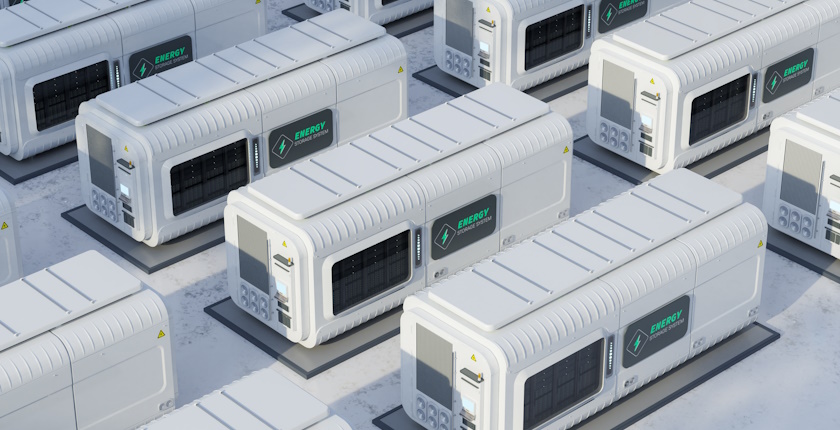
Developers of 31 standalone battery storage facilities in Bulgaria won EUR 117 million from EU funds. The overall planned capacity from the round tops 4 GWh. Conversely, Aurora Energy Research doubts that the ambitious targets in the sector would be fulfilled.
The Ministry of Energy of Bulgaria signed off on BGN 228.9 million (EUR 117 million) in the second round of its program National Infrastructure for Storage of Electricity from Renewable Sources – RESTORE. The grants are for 31 projects for standalone battery energy storage systems or BESS.
Total capacity covered exceeds 4 GWh, more than double the minimum target! The ministry has awarded EUR 587 million in the first round and decided to extend it. The National Recovery and Resilience Plan (NRRP), under the European Union’s Recovery and Resilience Facility (RRF), covers the scheme.
Thirty endeavors are in reserve
There were 93 applications. Thirty were placed on a reserve list and another three eligible projects were ultimately rejected.
All BESS facilities will be connected to the electricity transmission network of Electricity System Operator (ESO). Otherwise, they would be on the distribution grid, low voltage, but with a direct optical link to ESO, the state-owned transmission system operator (TSO).
Each successful applicant gets up to 50% of costs. The upper limit was EUR 80,000 per MWh of usable capacity, excluding value-added tax, and the average landed below two fifths of the maximum.
A group of seven projects are getting the highest sums, some EUR 9 million MWh apiece. The developers of the smallest two will sign deals for just above EUR 1 million each.
EU’s deadline closing in
Importantly, investments within the procedure must be completed by mid-summer, which means the batteries are on the grid then. The call was therefore envisaged for mature projects.
Bulgaria also had a few tenders for colocated and household BESS. Many projects are advancing even before or without such subsidies.
Aurora Energy Research estimates that out of 5 GW of supported capacity in the pipeline, only 1.8 GW overall would be operational in 2026. The trajectory hits 3 GW in 2030. Namely, Bulgaria still lacks contractors.
The firm said the situation exposes challenges like overbuilding, market cannibalization and delays. They are increasingly relevant across South-Eastern Europe, Aurora added.


Be the first one to comment on this article.