


The cost of supporting renewables in the EU fell after auctions were introduced while annual capacity additions grew, according to a new report by the European Commission.
About five years ago, European states started to change the way that they support renewables, moving from a tariff system to auctions. The European Commission published a new report outlining the changes that took place in each country before and after the auctions started.
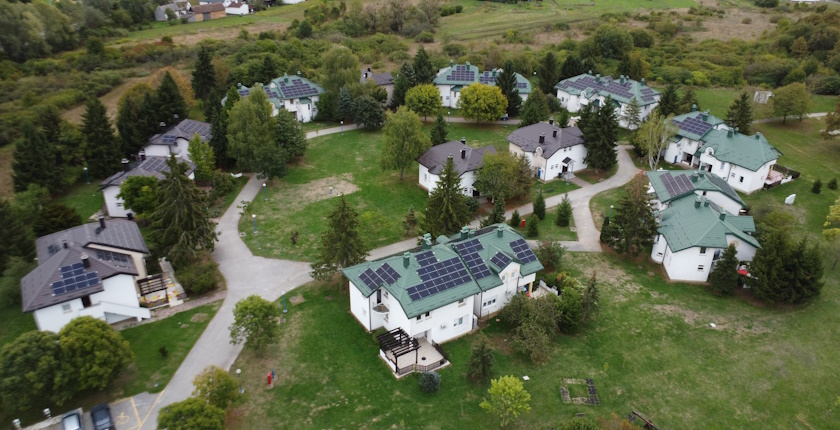
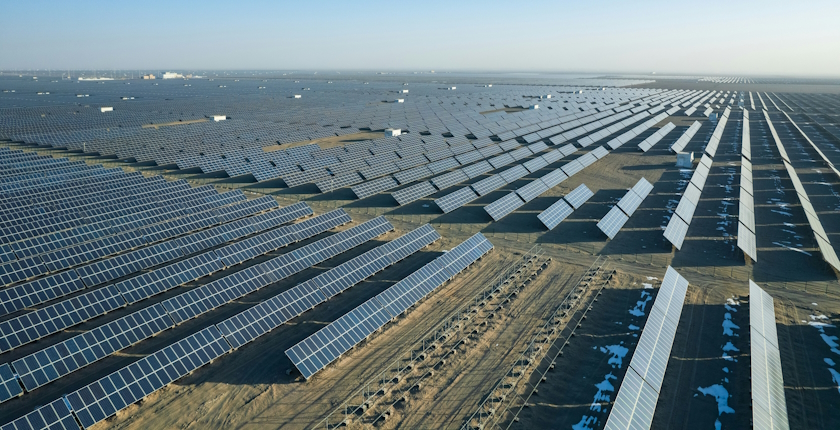
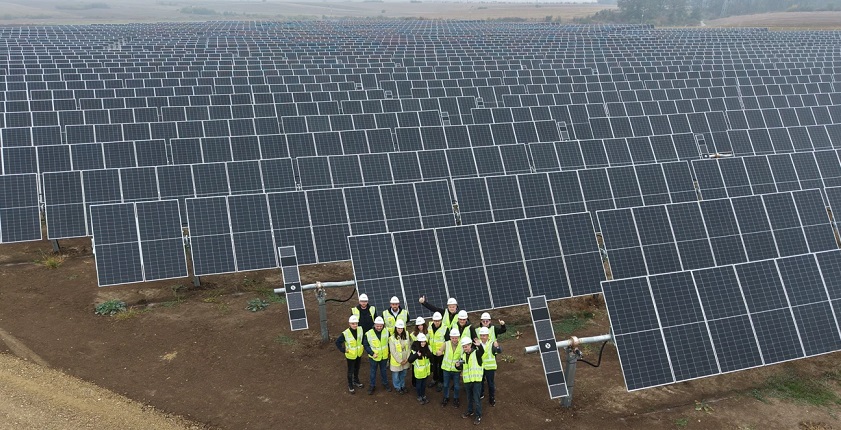
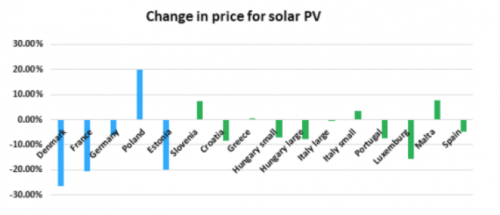
In photovoltaics, the annual cost of public support fell by 4.73% on a European level after auctions were introduced.
As for the markets in the Balkan region, the cost of PV remained the same in Greece, while average capacity additions increased from 8.3 MW to 160.8 MW per year after the introduction of the tender mechanism. The rise, at 1,829%, was the highest in the European Union, even though the level of competition was not very high in the first tender, with only a slight oversubscription.
Slovenia was one of only five European countries where the cost of PV rose after auctions were introduced. The increase was about 8%, while installations in the country were reduced by 30%, from 9.7 MW to 6.7 MW. However, under the feed-in tariff system prior to the tender, the prices that were set by the administration were reduced at a very fast pace, reaching a level that was too low for producers.
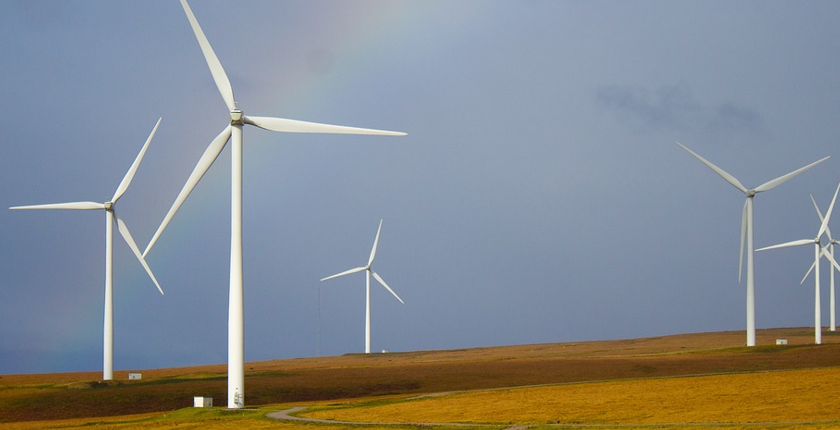
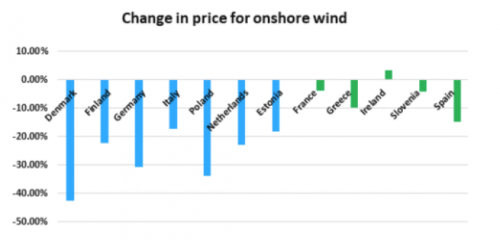
When it comes to wind energy, the drop in costs in Europe amounted to 14% in Europe. Greece recorded a fall of 10% in subsidized costs after auctions, while installations rose by 156%, from 242.7 MW to 622 MW. In Slovenia, the costs dropped by about 4%.
Level of competition is crucial for reducing costs
The general conclusion is that in most cases, auctions led to a reduction in costs of supporting renewables, while increasing installations, therefore progress has been made towards the EU’s goals for 2020 and 2030.
The European Commission said tendering procedures provide the necessary framework to deploy renewable electricity production facilities at the lowest possible cost, pointing to data indicating that in most cases the cost reduction was a result of the implementation of tender-based schemes for all observed technologies.
For both solar power and onshore wind, evidence shows that if competition in the auction is high (reaching an oversubscription level of more than 1.5), the reduction in the cost of support tends to be higher than for auctions where competition is less intense. In other words, tender procedures achieve cost reductions if they generate a sufficient level of competition.
Western Balkans countries move to auction system
In the wider Balkan region, so far auctions have been held in Albania, Croatia, Greece, North Macedonia and Turkey.
Montenegro has announced its intent to join other countries in Southeastern Europe that conduct auctions as a model to support the development of renewable energy sources.
In Croatia, the first procedure for awarding premiums for utility-scale renewable power plants resulted in a poor response. During the first auction earlier this year, only 19 applications were received for a total capacity of 150 MW, against the 638 MW offered.
After many delays, Serbia last said it would start the first auction by the end of September of this year, with a 400 MW quota for wind power projects.