





Foto: Balkan Green Energy News


Energy-intensive industries in the Western Balkans face substantial pressure in the process of decarbonization, and their competitiveness is being additionally tested by the mandatory carbon tax. While there is “no silver bullet” for energy-intensive industries, there are some “low-hanging fruits,” in the sense that well-targeted improvements could deliver results quickly. It is one of the key messages from a panel discussion held within Belgrade Energy Forum – BEF 2026. As the energy landscape becomes more complex, energy-intensive companies will be more inclined to become electricity producers themselves to increase their competitiveness.
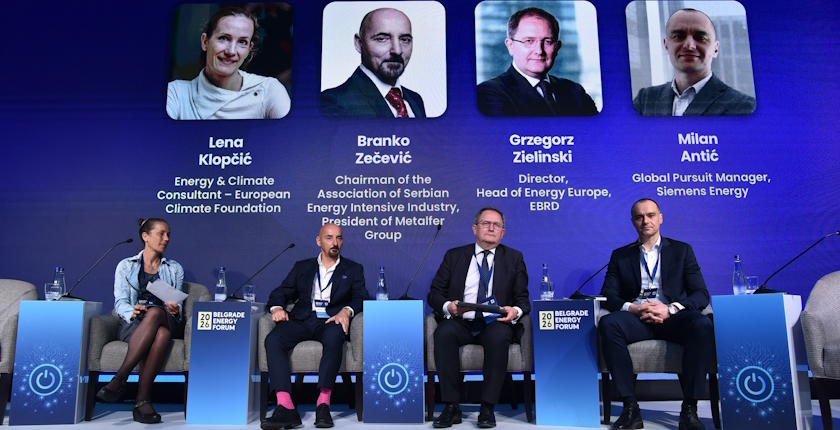
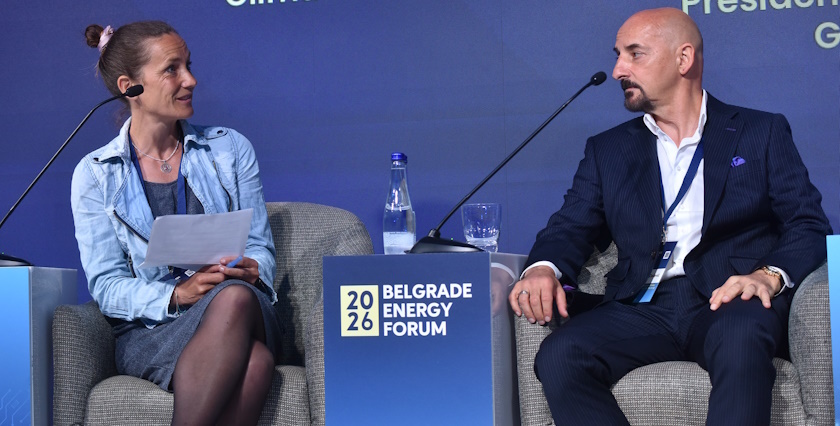
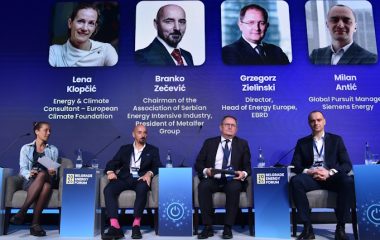
The panel titled Decarbonisation Strategies of Energy-Intensive Industries was part of the first day of Belgrade Energy Forum – BEF 2026, organized by Balkan Green Energy News. Lena Klopčič, Energy & Climate Consultant in the European Climate Foundation, moderated the discussion.
On January 1, 2026, the Carbon Border Adjustment Mechanism became effective. Importers of aluminum, fertilizers, cement, iron and steel, hydrogen and electricity into the European Union are required to pay a tax on CO2 emissions released during production.
Apart from sustaining profitability, common challenges for energy-intensive industries in the Western Balkans include differing possibilities for technological adaptation at a reasonable cost, difficulties in securing financing, as well as coping with changing rules and legislation.
On top of that, some companies, due to their technological processes, have limited possibilities for adapting their production to become greener, or the cost of transition is not commercially viable.
Energy-intensive industries in the region need more time for decarbonization
Industry representatives warned that potential success in decarbonization largely depends on the starting point of each industry and each individual company.
“For example, steel producers still using traditional methods, with iron ore and coke, have very high CO2 emissions. Producers using electric arc furnaces, which use steel scrap as the main raw material and electricity as energy, have a much smaller CO2 footprint and can become greener much more easily,” Branko Zečević, chairman of the Association of Serbian Energy Intensive Industry (ASEII), explained.
Older energy-intensive companies in the region are the ones facing the biggest threat, he warned.
“The problem they are facing is basically how soon they are going to close down, because grants are not available to them. In the EU, similar companies had access to funds over the last 10 years to change those technologies, and they managed to adapt,” Zečević said.
The Association of Serbian Energy Intensive Industry gathers companies from three industries affected by CBAM: cement, fertilizer, and steel. Despite their differences, they have common goals and have used a joint approach to be more effective in dialogue with institutional partners.
“We are now organizing a regional association with companies from North Macedonia, Montenegro, Bosnia and Herzegovina, and Albania, together with our association, to have a much more unified voice when we talk with EU bodies, because a regional voice is much stronger than each individual one,” Zečević insisted.
“Cost of electric energy is one of the major costs for any energy-intensive industry, and I don’t think any company can afford not to be a player in this field,” Branko Zečević said
He believes there is no dilemma that the decarbonization process will continue and that industries have no choice but to adapt. In his opinion, however, industry in the region needs more understanding, more time, and more support. “The decarbonization legislation from the EU came too fast for the region, and the region will need more time to adapt,” he said.
Some companies launched preparations for CBAM on time
Zečević, who is also president of Metalfer Group, argued that companies that started investing in decarbonization earlier have entered the CBAM scheme more readily, and with lower costs when exporting to countries in the European Union.
He gave the example of his company, which started investing heavily in decarbonization four or five years ago and now has one of the lowest CO2 footprints per ton of steel produced in Europe, including the EU.
“Today, CBAM does not hit us very hard at all; we barely feel it,” he said.
He believes that the right path for an energy-intensive company is to become a power producer, at least for a substantial percentage of its own consumption.
“Cost of electric energy is one of the major costs for any energy-intensive industry, and I don’t think any company can afford not to be a player in this field, because the risk of relying completely on the market is too high. Our goal at Metalfer is to cover at least 50 percent of our consumption from our own production,” he said.
Finding the way forward, company by company
When considering technical solutions, energy-intensive companies should also mind the context of a broader strategy — where they want to be in three, five, or ten years.
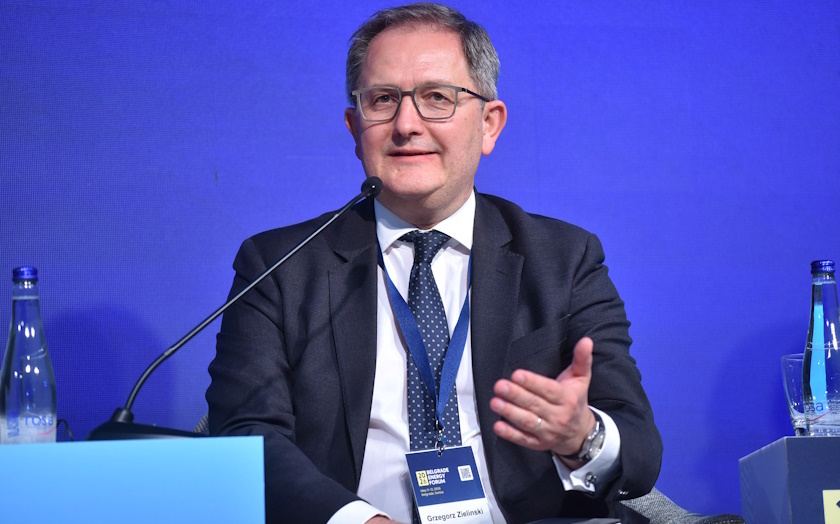
Grzegorz Zieliński, Director and Head of Energy in Europe in the European Bank for Reconstruction and Development, reminded the audience that all companies with CBAM challenges face them because they want access to the European market.
Zieliński: If CBAM is going to stay, the sooner you start tackling it, the sooner you are going to be ready to face the EU’s Emisions Trading System
“Once you are in the European market, you are subject to ETS, which is a different mechanism, but the objective is the same. So if a company, industry, or country takes a longer-term view with potential accession to the EU, there is no other way. As much as ETS is disliked or even hated by some businesses and industries within the EU, it still seems unlikely that ETS as such is going to be abandoned. If it is going to stay, the sooner you start tackling CBAM, the sooner you are going to be ready to face ETS,” he said.
Purpose of grants is to reform businesses
While noting that there are EU programs supporting decarbonization as a source of grant financing, Zieliński added that grants themselves are not the purpose of decarbonization; the purpose is to reform the business and make it more competitive.
Difficult decisions often come with costs, including political costs, which also have to be taken into account. In terms of shaping decarbonization policy for energy-intensive industries, there are some low-hanging fruits, possible to focus on first, Zieliński argued.
“A given company may have three or four production lines. If all of them together may not survive, perhaps two of them, modernized at a cost that would be only a fraction of what it would take to modernize the entire business, could be the way forward. Just keep those two, make them profitable, immune to all externalities, including CBAM, and make them a good base for building a new decarbonized business,” he explained.
Industrial companies turning into energy producers
Industries facing decarbonization are more likely to find solutions if they start thinking outside the box, especially when it comes to the consumption and production of energy.
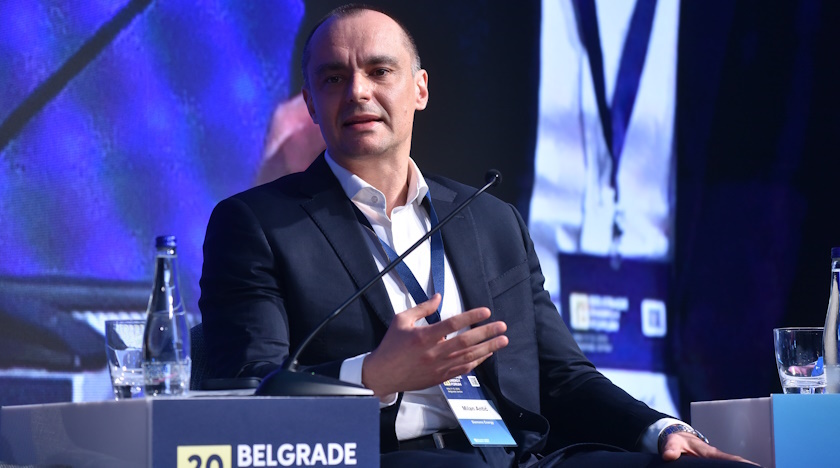
“Many facilities in Europe were built 30 to 50 years ago, and surely there are many things that can be improved if we take a more holistic approach and not just focus on one technology or piece of equipment. Brownfield modification and efficiency improvements can be some of the low-hanging fruits that deliver results quickly,” said Milan Antić, Global Pursuit Manager in Siemens Energy.
He insisted that all stakeholders are important in the value chain, as industries operate in a very complex environment, and regulation is necessary to make the planet greener.
The energy landscape will become more complex
Many industrial companies are no longer just simple manufacturers; they are also becoming energy companies themselves, investing in renewables and managing their own generation, flexibility, efficiency, and resilience.
Antić said that developments in the industry indicate that the energy landscape will become more complex in the future.
“There will probably be many hybrid solutions and different energy sources. Companies need to focus on how they use energy and revise all processes in order to become more energy-focused and energy-driven, because eventually that will make their products more competitive, and the industries can survive this way,” he said.

Be the first one to comment on this article.