





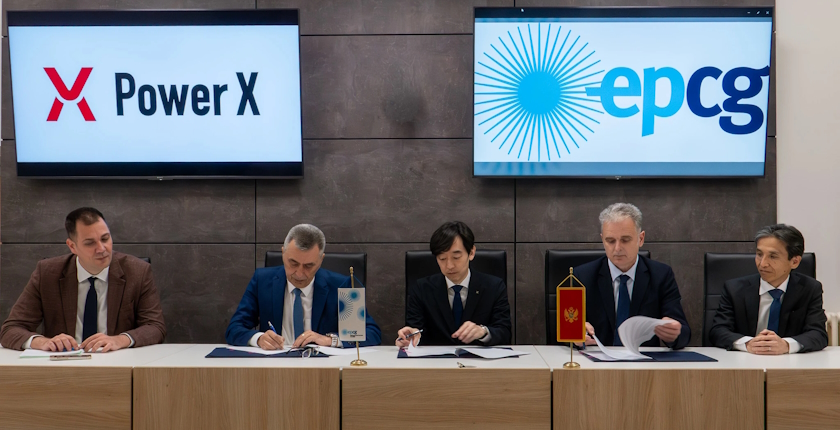
Photo: PowerX


PowerX, headquartered in Tamano City in western Japan, agreed to cooperate with Montenegro’s state-owned power utility EPCG on planning 500 MWh of battery storage in the Balkan country. The company said it is also interested in the establishment of manufacturing activities, within efforts to expand to the European market.
Like most of the Western Balkans, Montenegro doesn’t have any grid-scale battery energy storage systems installed yet. PowerX saw an opportunity there and signed a memorandum of understanding with state-owned Elektroprivreda Crne Gore (EPCG) regarding a strategic cooperation in the segment. The indicative BESS capacity target is 500 MWh within three years, to support the large-scale integration of renewable energy and strengthen domestic grid stability, the Japanese company said.
Founded in 2021 by President and Chief Executive Officer Masahiro Ito, PowerX is active in manufacturing, sales, and operation of battery facilities. The headquarters are in Tamano City, in Okayama prefecture in western Japan.
It is listed on the Tokyo Stock Exchange and backed by Japanese industrial conglomerates. Among them is Itochu, which has expressed interest in a waste-to-energy project in Montenegro.
Montenegro is gateway to Europe for PowerX
Montenegro adopted its National Energy and Climate Plan in December, setting 2030 targets that include a minimum 50% share of renewable energy in gross final energy consumption, PowerX pointed out. EPCG, the country’s largest electricity producer, has identified BESS as a key component of its grid modernization and renewable energy integration efforts, it added.
Under the MoU, the parties will collaborate on identifying optimal deployment plans to support grid reliability, peak shaving and frequency regulation, with comprehensive after-sales support, PowerX said. The Japanese company revealed it would explore the possibility of setting up local BESS assembly capabilities.
Masahiro Ito: Battery energy storage systems are becoming a core part of energy infrastructure
The European Union candidate status, coupled with the Monita undersea power interconnection with Italy, makes Montenegro a strategically important market for clean energy infrastructure in Europe, the announcement reads. PowerX said it aims to leverage the cooperation as a foundation for expanding its BESS business into the European market.
Battery energy storage systems are becoming a core part of energy infrastructure, enabling greater integration of renewable energy while supporting grid stability, flexibility and resilience, President and CEO Masahiro Ito stressed. “Through this strategic cooperation, we aim not only to deploy advanced battery storage solutions, but also to build a long-term foundation for PowerX’s activities in Montenegro and the wider region, including the development of local battery system assembly capabilities,” he stated.
The company also works with scalable modular data centers and battery-buffered electric vehicle charging systems. Its BESS technology has been selected for 153 project sites in Japan, for an overall 2.8 GWh. PowerX is planning to ramp up its annual manufacturing capacity to 7.5 GWh by 2030 from 1.2 GWh.
EPCG seeking supplier for pilot BESS
EPCG, which has just inaugurated its first wind park, operates hydropower plants, the country’s only coal plant and small photovoltaic units.
“This partnership represents an important step in the modernization of our power system and further confirms EPCG’s commitment to an energy transition based on innovation and sustainability. Cooperation with PowerX gives us access to advanced energy storage technologies, which are essential for the stable integration of renewable energy sources and the long-term energy security of Montenegro,” CEO Zdravko Dragaš asserted.
Estimated procurement costs for the small battery system have jumped to EUR 120,000 excluding VAT
The utility is conducting a repeated public call for a pilot BESS facility, receiving bids until May 25. The required operating power is 100 kW to 130 kW. As for the storage capacity, EPCG said it needs 200 kWh to 270 kWh, while last time the maximum was 260 kWh. The company increased the estimated costs excluding value-added tax to EUR 120,000 from EUR 75,000. Earlier, its tender for two large battery systems failed as it couldn’t obtain a loan.
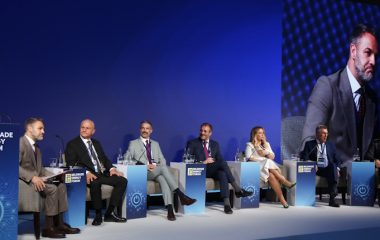
Green energy sources, excluding hydropower, can hardly achieve their full potential without a strong development of battery systems, President of the Board of Directors of EPCG Milutin Đukanović said this week at Belgrade Energy Forum – BEF 2026. Balkan Green Energy News organized the annual event in Serbia’s capital for the fourth time.
Notably, the company is establishing a joint venture with Abu Dhabi Future Energy Co. (Masdar) to work on clean energy projects in Montenegro including battery storage.
Be the first one to comment on this article.