





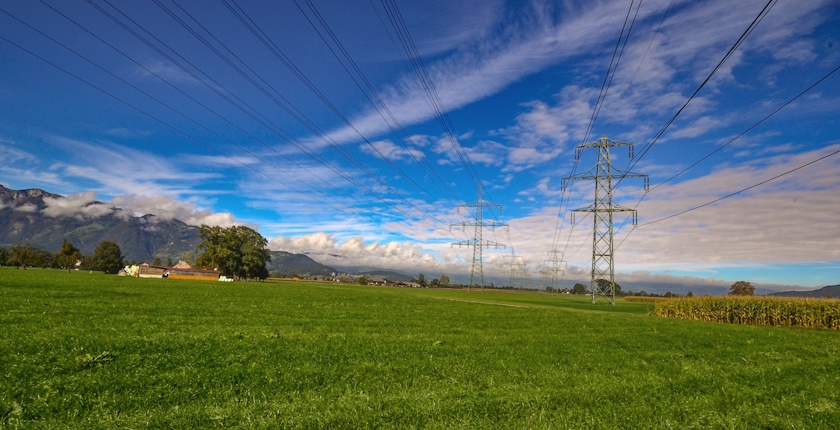
Photo: Walter Sturn from Pixabay


Most items on the first list of Projects of Energy Community Interest (PECI) are at an early stage of development, and there are a number of challenges that may affect the planned implementation timeline, according to an evaluation by the Energy Community Regulatory Board.
The Evaluation Report on Projects of Energy Community Interest (PECI) is an overview of the implementation progress of projects included in the 2024 PECI list.
The report covers six priority projects, five electricity transmission projects and one energy storage project:
- Closing the 400 kV Albanian internal ring;
- Increasing the capacity of the existing 220 kV interconnection between Bosnia and Herzegovina and Montenegro, 220 kV OHL Trebinje–Perućica;
- Trans-Balkan Corridor, Double OHL 400 kV Bajina Bašta (Serbia) – Višegrad (Bosnia and Herzegovina) / Pljevlja (Montenegro), (BA and ME sections part of PECI list);
- Reconfiguration of 400 kV grid and new 400 kV interconnection Albania–Kosovo*;
- 330 kV OHL Balti (Moldova) – Dnestrovsk HPP-2 (Ukraine);
- DTEK Storage (225 MW).
They are identified as key for strengthening cross-border interconnections, enhancing security of supply, and supporting the integration of renewable energy across the Energy Community.
So far, one project (BiH-Montenegro interconnection) secured direct financing from the European Bank for Reconstruction and Development, while two (Albanian internal ring, and Kosovo*-Albania interconnection) received European Commission support in 2025 through the Western Balkans Investment Framework (WBIF), the Energy Community Secretariat stressed.
The assessment shows that most projects are currently in conceptual, feasibility, or planning phases, with implementation timelines extending into 2028–2032. Activities in 2025 have primarily focused on feasibility studies, preparatory works, work around financing arrangements, and regulatory alignment, rather than construction.
No systemic implementation delays were identified when assessed against the expected project maturity following 2024 PECI designation, the report reads.
The report highlights several structural challenges
At the same time, the evaluation highlights several structural challenges that may affect timely implementation in later phases:
- Permitting and administrative procedures, particularly for cross-border infrastructure;
- Financing constraints and increasing investment costs;
- External risks, including geopolitical and security factors in the case of Ukraine.
However, early identification and mitigation of implementation risks will be critical to ensure that projects can transition efficiently into construction phases in the coming years, the report underscores.
The Energy Community Regulatory Board sees continued regulatory oversight and proactive engagement by national regulatory authorities (NRAs) as essential to ensure that projects progress efficiently towards implementation.
In March, the secretariat launched a public consultation on eight projects under consideration for the next PECI list.
The selection in line with Energy Community TEN-E Regulation is expected to be adopted in December 2027, following the ECRB opinion anticipated by the end of August 2026.




Be the first one to comment on this article.