







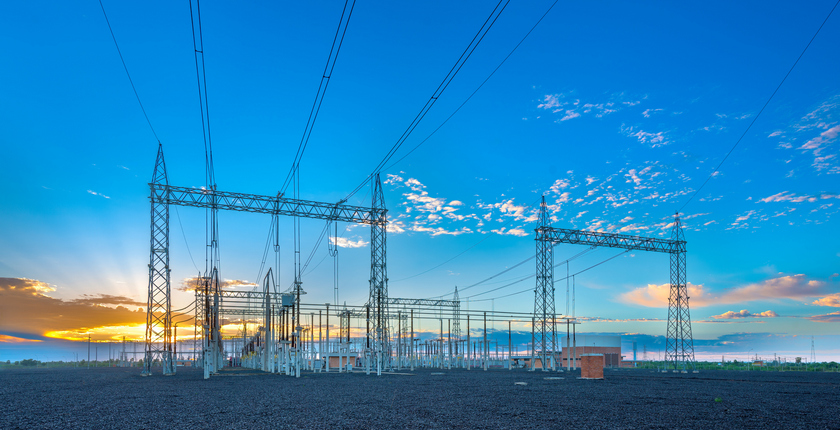
Photo: iStock


As the European Union seeks to increase clean power generation to improve energy security, its grids lack the capacity to connect new renewable electricity plants and meet additional demand. At least 120 GW of planned projects in the EU are at risk due to grid constraints, and the solution lies in cutting red tape and rolling out non-wire solutions, according to Ember’s analysis.
In many EU countries, grid development has not kept pace with the energy transition, leaving large volumes of renewable energy projects stuck in connection queues, Ember noted, adding that the countries expecting the largest volumes of new wind and solar capacity have the least prepared grids.
At the same time, industrial facilities face multi-year delays in securing the electricity supply needed to expand production, while data center developers are moving to regions with more reliable and faster grid connections, according to the report.
On the generation side, there is a 120 GW gap between planned renewable expansion by 2030 and available grid capacity across 20 reporting countries. However, the figure is likely even higher, as some countries, including Germany and Italy, do not publish their grid capacity data, according to the think tank.
Half of the countries reporting grid data lack the capacity needed to connect new power plants, with the biggest constraints recorded in Austria, Bulgaria, Latvia, the Netherlands, Poland, Portugal, Romania, and Slovakia.
In 17 countries, more than two-thirds of wind farms and large-scale solar plants planned by 2030 are at risk of grid connection delays.
Grid limitations could affect 1.5 million household rooftop solar projects
In the household segment, around 1.5 million rooftop solar projects, totaling 16 GW, could face connection delays, as half of the reporting countries have insufficient grid capacity to accommodate the expected growth in small-scale solar by 2030.
Among the countries tracked by Balkan Green Energy News, Slovenia faces the highest risk for household solar projects, with 32% of all homes potentially affected by insufficient grid capacity. The country expects 300,000 household rooftop solar projects by 2030, but its grid lacks the capacity to connect them, according to the report.
In Greece, by contrast, more than 800,000 households are expected to install rooftop solar by 2030, while Croatia plans 200,000 such projects, all of which can be connected to the grid.
Ember also notes that the figures come on top of nearly 700 GW of renewables capacity currently in grid connection queues in eight countries that report the data.
Most distribution grids are ready to support electrification of households, but capacity for new industrial demand varies
When it comes to electricity demand, six out of the eight reporting countries have enough grid capacity to enable up to one-third of households to connect a new heat pump or electric vehicle charger. However, households in Poland and Spain would face major limitations.
As for industrial demand, available capacity is sufficient to connect large industrial sites in four of the seven countries that publish data on transmission grid capacity for new loads. However, three countries report zero capacity available – Austria, Bulgaria, and Romania.
Non-wire solutions could unlock 140 GW to 185 GW of renewables across Europe
To address these bottlenecks, European countries need to swiftly reform administrative procedures and deploy non-wire solutions. Implementing such solutions will open space for both new clean power and emerging demand types, such as data centers, according to Ember.
Non-wire solutions, such as grid-enhancing technologies (GETs) and non-firm connection agreements, could unlock 140 GW to 185 GW of capacity across Europe, according to estimates by the International Energy Agency (IEA), Ember notes.


Be the first one to comment on this article.