







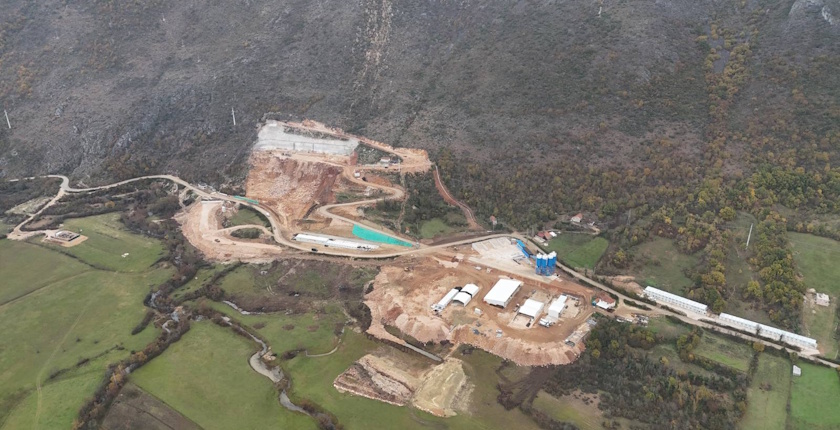
HPP Dabar (photo: Elnos)


The Croatian Ministry of Environmental Protection and Green Transition has initiated an official procedure under the Espoo Convention regarding the Gornji Horizonti hydropower subsystem in the Republic of Srpska in Bosnia and Herzegovina. The project includes the construction of three hydropower plants.
Minister of Environmental Protection and Green Transition Marija Vučković explained that the official procedure was launched in November with the Secretariat of the Espoo Convention (the UNECE Convention on Environmental Impact Assessment in a Transboundary Context).
She recalled that both Croatia and BiH are signatories to the convention, local media reported. The ministry issued a written opinion stating that the project’s development didn’t adhere to rules regarding the participation of an interested state that could suffer negative consequences from a major investment in its neighbourhood, Vućković added.
While Croatia cannot prohibit such projects, it can demand to be included in a satisfactory manner and receive answers to all its questions, she pointed out.
Vučković: Expert questions remain unanswered after 15 years
Vučković claimed that the construction of energy facilities in the Trebišnjica river basin has had visible negative effects on the Neretva river valley for decades. She noted that numerous questions posed by Croatian experts over the last 15 years—from the HE Dabar project to newer initiatives—remain unanswered.
In the spirit of good-neighborly cooperation, Croatia will insist on getting answers, the minister added.
Prefect of the Dubrovnik-Neretva County Blaž Pezo stressed that the Gornji Horizonti project threatens the flow of fresh water through the Neretva river. Croatia is actively trying to challenge this project, he underscored.
Croatia is implementing the project to protect land and water from salinity in lower Neretva area
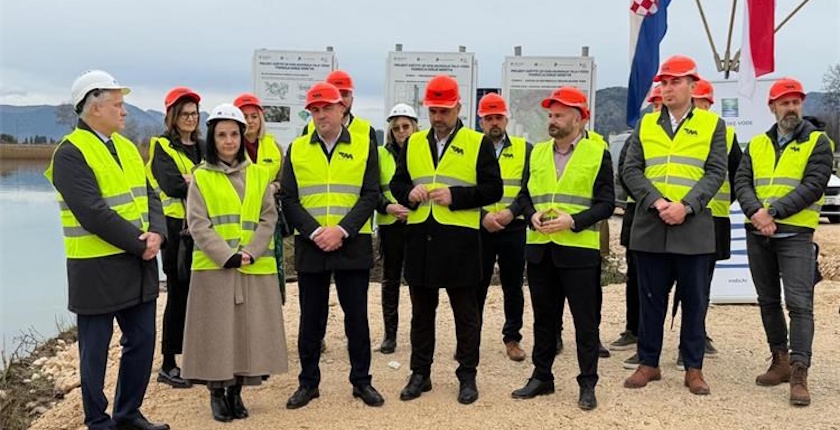
Vučković and Pezo discussed the issue in Opuzen, during a visit to the site of a EUR 85.5 million project in the Donja Neretva (lower Neretva) area for protecting land and water from salinity.
The first phase includes the construction of a barrier on the Neretva river to stop seawater encroachment. The works are estimated at EUR 30 million and are expected to take four years.
The second phase will see the establishment of a freshwater basin upstream of the barrier to wash salt from agricultural soil and provide irrigation.
The Gornji Horizonti hydropower subsystem involves diverting water from the Gatačko (Gacko) and Nevesinjsko (Nevesinje) plains, through the Dabarsko (Dabar) and Fatničko (Fatnica) plains, into the Bilećko (Bileća) lake.
It comprises three hydropower plants: Dabar, Bileća, and Nevesinje. The project is being implemented by Elektroprivreda Republike Srpske (ERS). The construction of HPP Dabar is underway.

Be the first one to comment on this article.