







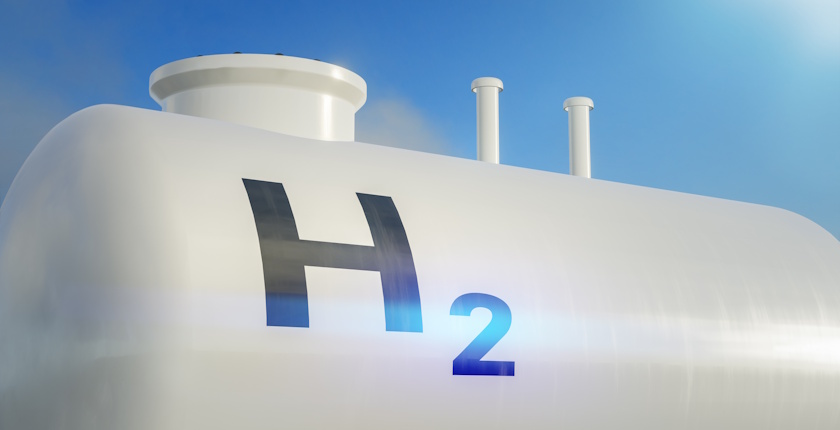
Photo: Freepik


Author: Dr. Thomas Hillig, EUSEW’s digital ambassador
In recent years, hydrogen has captivated the imagination of the energy sector, garnering significant attention from governments, corporations, and the media alike. The hype around hydrogen seemed to promise a transformative shift in the global energy landscape. Many ambitious projects were announced, with plans for massive hydrogen production in the gigawatt (GW) scale.
However, as with many technological promises, the initial momentum has somewhat waned. Today, the hydrogen narrative is less about large-scale ambitions and more about pragmatic realism.
Scaling down ambitions, but progressing forward
The focus has shifted to smaller projects, typically in the range of 2-20 MW, particularly in Europe. While these projects are crucial steps forward, their impact on large-scale decarbonisation, particularly in energy-intensive industrial sectors, remains limited.
In this early stage, hydrogen projects will not significantly contribute to achieving Europe’s decarbonisation objectives. For short-term decarbonisation, direct electrification is more cost-efficient. However, starting to develop hydrogen now ensures that applications are mature at the end of the energy transition when all potential for direct electrification has been leveraged.
Governments must support research and development (R&D) to drive down the cost of hydrogen production, improve electrolysis processes, and enhance hydrogen storage and transportation. Collaborations between governments, industries, and research institutions will be essential to unlock hydrogen’s potential as a mainstream decarbonisation lever – from production to a broad variety of applications.
The secondary layer: hydrogen as a location factor
Despite the scaling back of some of the overly ambitious projects for massive hydrogen production, access to hydrogen, in particular, green hydrogen seems to be increasingly perceived as critical for site selection and business location decisions to build new or expand operations. This shift is driven by several factors, including the pressure to reduce carbon footprints, comply with tightening emissions regulations, and secure access to clean energy sources in the future.
For example, industries with high energy demands, such as steel, chemicals, and glass, are beginning to recognise that their long-term viability will depend on their ability to access affordable, green hydrogen. As companies work to reduce their carbon emissions, hydrogen can serve both as a fuel and a feedstock, offering a route to decarbonise chemical and industrial processes that are difficult to electrify.
The hydrogen reality starts now
This is where regional advantages come into play. Companies that are situated in regions with good access to green hydrogen will have a clear competitive edge, not only in terms of their environmental credentials but also in terms of cost. As hydrogen production increases and economies of scale are realised, the cost of green hydrogen is expected to decrease.
Regions that establish themselves as hubs for hydrogen production and infrastructure development will be in a prime position to attract businesses that rely on hydrogen as a key input. Conversely, regions that fail to invest in renewable energy and hydrogen infrastructure risk losing out on investment and innovation, potentially facing deindustrialisation and business delocalisation.
The time to act is now.
This opinion editorial is produced in co-operation with the European Sustainable Energy Week (EUSEW) 2025. See ec.europa.eu/eusew for open calls.
Disclaimer: This article is a contribution from a partner. All rights reserved.
Neither the European Commission nor any person acting on behalf of the Commission is responsible for the use that might be made of the information in the article. The opinions expressed are those of the author(s) only and should not be considered as representative of the European Commission’s official position



Be the first one to comment on this article.