






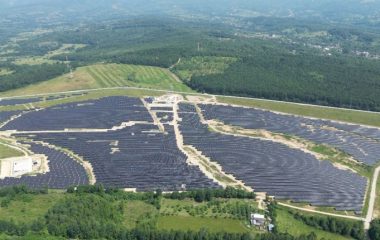
Photo: EUSEW


Simone Accornero, EUSEW Young Energy Ambassador, states that in 2023, the amount of renewable energy purchased by businesses and corporations in Europe surged by over 52%, yet questions persist about the true impact this has had on emission reductions and the acceleration of the deployment of new renewable energy capacity. This article explores the inconsistencies of corporate renewable energy procurement rules across different EU policies and the critical need for clearer and tighter rules to drive genuine climate progress and bolster the EU’s industrial resilience.
In 2023, the amount of renewable energy purchased by businesses and corporations in Europe grew by over 52%, reaching 20 GWs. However, several academic papers like Bjorn, A. et al. (2022) have questioned the true emission reduction behind these figures, sparking debate over the credibility of companies’ environmental claims based on renewable energy procurement, a position echoed in leading media outlets like The Washington Post, Financial Times and Wall Street Journal.
Critics argue that allowing companies to purchase certificates (e.g., Guarantees of Origin) to claim renewable electricity use without any rules on where, when, and from which asset the GoOs originated, doesn’t always result in tangible emission reductions, doesn’t incentivize building additional renewable energy generation and creates market distortions like Norway exporting more GoOs than actual renewable electricity – Paris, A. et al. (2024). Meanwhile, the recent “Draghi Report” on EU competitiveness highlighted the importance of corporate renewable energy procurement through Power Purchase Agreements (PPAs) for bolstering the EU’s industrial resilience. This debate is central to EU policymakers, affecting both the bloc’s industrial competitiveness and its role as climate transition leader and policy innovator.
How are renewable energy use claims dealt with in EU rules?
Guarantees of Origin (GOs) are digital certificates used to verify the renewable source of electricity across Europe. Issued under the EU Renewable Energy Directive, each GO represents 1 watt-hour (Wh) of electricity generated from renewable sources such as wind, solar, or hydropower.
The RFNBO Delegated Act imposes strict rules for proving renewable electricity use in green H2, ammonia, etc. It must be generated locally, within the same hour as consumption, and from newly built power plants. This shows EU leadership, as similar U.S. rules under the 45V Clean Hydrogen Tax Credit were recently ratified.
On the other hand, the Carbon Border Adjustment Mechanism (CBAM) allows exporters from outside the EU to rely on renewable energy procurement to lower products’ embedded emissions without any of the strict rules of the RFNBO Delegated Act mentioned above. Lax rules are also present in the EU’s renewable electricity reporting rules for Data Centers (EU 2024/1364).
The recent EV Batteries Delegated Act takes a completely different position by not allowing renewable energy procurement in any shape or form to reduce embedded emissions. This has caused a recent outcry from many companies and trade associations.
Transparency and sccountability through corporate sustainability reporting
Beyond the above policies, the Corporate Sustainability Reporting Directive n (CSRD) introduces mandatory reporting, requiring large companies, listed SMEs, and non-EU firms with significant EU activity to disclose detailed sustainability data, including renewable energy use and related emissions.
However, CSRD rules for renewable energy usage claims are based on the GHG Protocol Scope 2 Guidelines – the global standard for corporate renewable energy claims and related carbon emissions – which is currently being revised. It is therefore currently unclear what rules companies will have to follow.
Driving global change and future steps
As society strives to electrify energy usage, decarbonize electricity generation, and link financial and carbon markets, the definition of what it really means for companies to procure and consume green energy is pivotal.
As a Young Energy Ambassador, I urge the EU to show clear signs that it supports fostering, not undermining, renewable energy procurement, with clearer and stricter rules that incentivize the development of additional renewable energy capacity. With improved rules and stringent mandatory reporting, corporate renewable procurement can drive lasting climate impact and bolster the EU’s industrial resilience.
This opinion editorial is produced in co-operation with the European Sustainable Energy Week 2025. See ec.europa.eu/eusew for open calls.

Be the first one to comment on this article.