







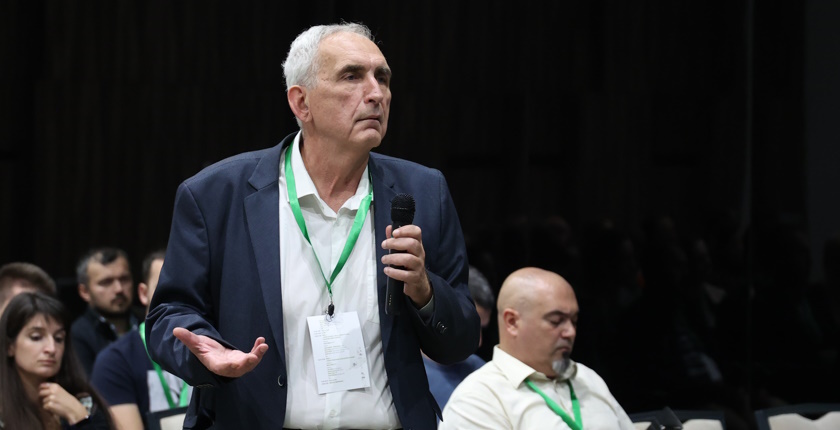
Damir Miljević (photo: RESET)


The decarbonization of electricity consumption in Bosnia and Herzegovina through the use of solar power by households and businesses is being hindered by legislators and power utilities, according to Damir Miljević, a member of the Management Board of RESET.
Speaking at the round table ‘Financing of public projects: Environmental and economic sustainability of coal-fired power plants’ in Banja Luka, organized by the Sarajevo Media Center, Damir Miljević said that another major issue is the absence of dialogue on the closure of coal mines and thermal power plants, Capital reported.
The easiest way to decarbonize domestic consumption, in his words, is to allow citizens and businesses to produce energy for self-consumption using solar panels. However, this approach has been halted in BiH, he added.
Miljević: Power utilities must understand that today anyone can produce electricity
This was done, he said, by adopting poor worded by-laws or by not adopting them at all. At the same time, state-owned power companies are blocking this development to maintain their monopoly, according to him.
In the meantime, foreign investors are rapidly doing everything they can to tap on the renewable energy potential in BiH, and the state is not protecting itself by preventing the export of the cheaper electricity they produce, Miljević stressed.
Closing coal mines and coal-fired power plants can be either cheap or expensive, which presents another problem, according to Miljević. He believes that BiH can decide determine the outcome.
At the same time, power utilities mistakenly think that they will be the drivers of the energy transition, but that hasn’t been the case anywhere in Europe, he noted.
Pavlović: the market will shut down coal power plants
Miljević said that these companies have to be transformed because everyone can produce energy today, so they would have to find another business, for example, balancing, storage, aggregation services.
Economist Zoran Pavlović said that it should be clear to everyone that electricity will be more and more expensive, especially from imports. The only solution is to turn to domestic renewable energy, primarily solar, which is not lacking in BiH, he added.
Pavlović noted that the market will shut down coal-fired power plants. Their production has become too expensive, he said.

Be the first one to comment on this article.