






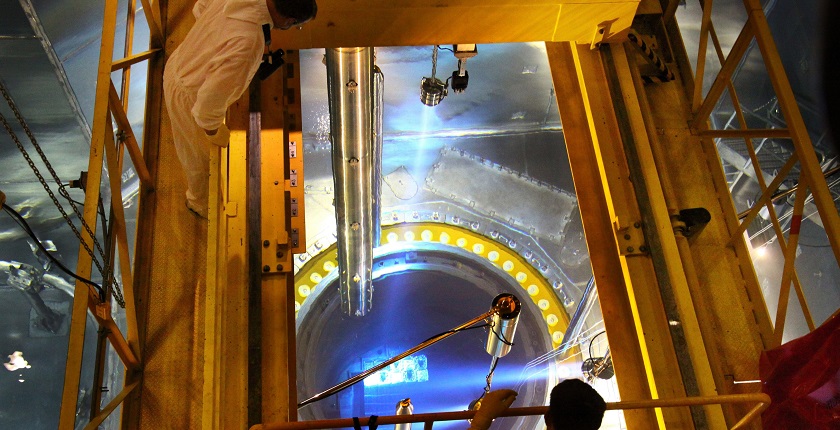
NEK (photo: NEK)


The Krško Nuclear Power Plant (NEK) performed a precautionary shutdown this morning, NEK said on its website and added that the facility had operated continuously since the completion of an overhaul in 2022.
The Krško nuclear power plant is located 100 kilometers east of Slovenia’s capital Ljubljana, close to the border with Croatia.
“The operating crew detected an increased leak in the primary system within the containment building. The leak has no repercussions on employees or surrounding residents and the environment and it remains below the limits of the technical specifications,” NEK explained in the statement.
It added that the shutdown was needed to determine the exact source of the leak and measures to fix it.
Therefore, [last night] the operating crew began a controlled gradual reduction of power, and the plant was shut down in the morning hours, the company said.
Pfeifer: The shutdown is needed to determine both the source of the leak and rehabilitation measures
When the power plant is shut down, the release of steam from the secondary, non-nuclear part of the power plant, which can be heard in the immediate vicinity, may occur from time to time, so the residents in the vicinity of the power plant are asked for their understanding.
Gorazd Pfeifer, chairman of the Management Board of NEK, said the shutdown was needed to determine both the source of the leak and rehabilitation measures.
He said earlier that the operating crew would start with a controlled gradual reduction of the facility’s capacity, its shutdown, and disconnection from the power grid.
The Slovenian Nuclear Safety Administration will conduct an inspection of the plant, he said.
NEK, with an installed capacity of 700 MW, covers 20% of electricity consumption in Slovenia and 14% in Croatia. The two countries jointly own the facility, which is operated by government-controlled companies Gen Energija and Hrvatska Elektroprivreda (HEP).
NEK operation extended for another 20 years in January
In January 2023, the Slovenian government issued an environmental approval to extend the operating life of the Krško nuclear power plant until 2043.
The assessment team found no safety risks in extending the operating life of the power plant from 40 to 60 years. It has been in operation since 1981.
Of note, Slovenia is considering the construction of a new unit at NEK.
GEN Energija recently said it was considering the possibility for its new unit in its Krško nuclear power plant to be built with a larger capacity than initially planned.

Be the first one to comment on this article.