







Photo: PeterDargatz on Pixabay


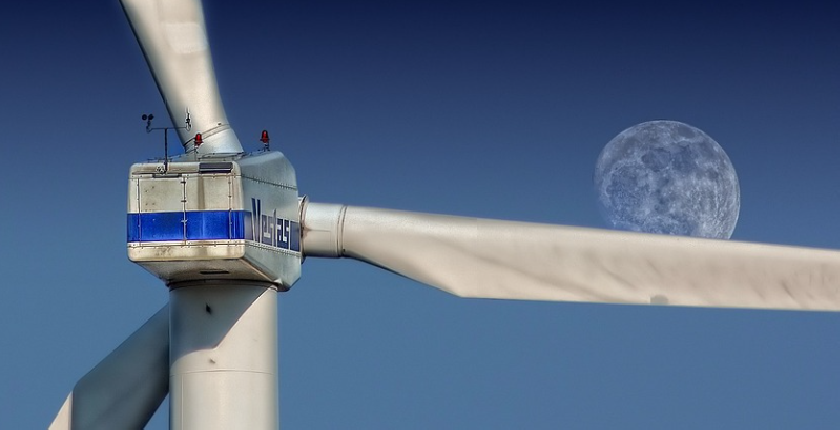
An extensive new energy law submitted to parliament by the Greek Ministry of Environment and Energy includes a rule on reusing old wind turbines.
One of the most interesting aspects of the law has to do with the ability to move turbines from existing wind farms in continental Greece to non-interconnected islands.
The bill aims to regulate giving second life to functioning wind turbines if the models are no longer manufactured. The proposal provides the opportunity to move smaller turbines to non-interconnected islands to boost renewable energy production at such locations. Their size has to be between 60 kW and 1 MW.
Investors in wind farms in islands isolated from the mainland electricity grid will have to get technical approval that the machines are in proper operating condition as well as for their remaining life expectancy. An additional requirement is that they can’t be more than 20 years in operation.
Such systems will continue to get compensated according to the existing remuneration mechanism.
The idea is to facilitate the installation of newer, larger and more advanced wind turbines in existing farms in continental Greece without wasting the potential of the older turbines, which are suitable for use in islands because of their small size and limited natural impact.
Average turbine size increasing
According to the Hellenic Wind Energy Association (HWEA or ELETAEN), Greece installed just 230 MW of wind farms in 2022, increasing the capacity in the country by 5.2% to 4.68 GW. The average size of wind turbines has been steadily increasing. The measure grew from 1.9 MW in 2018 to 3.4 MW in 2022 with progress in the technology.
Another trend in the Greek market is that companies that operate wind farms are applying to repower them so that they consist of a smaller number of larger turbines.

Hi There
I almost convinced that these wind turbines who tap energies from the weather system possible is a cause of the damaging weather around in the world.
The present damaging weather in Greece is a example, and also I see a linear connection with the build of these turbines and changing weather in stead it is because of warming. The turbines does mix air and heat in on the ground, the turbines offshore have even more weather impact.
You can not tap energy from a weather system, that is damaging for the world.
Even sun energy who need very big surface for some efficiently have impact, reason is these black panels do not bounce sun heat back to space or grass lands absorb it.
regards
Why 60 kw, I really wonder this