







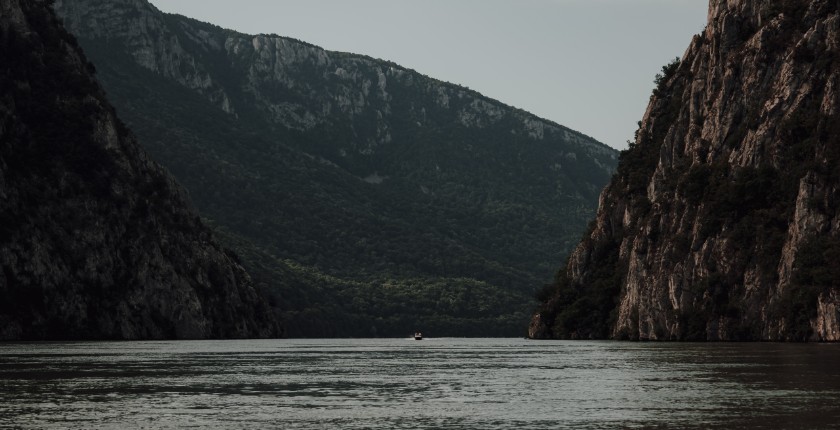
Photo: Iulian Patrascu from Pexels


Romania announced that talks would resume with Bulgaria on building the Turnu Măgurele – Nikopol hydropower plant on the Danube river. The 840 MW hydropower project, which has been on hold for decades, would be equally shared. The Bulgarian side has so far been reluctant.
Romania and Bulgaria will resume negotiations to build a hydroelectric plant between Turnu Măgurele and Nikopol, said Romanian Minister of Energy Virgil Popescu.
Popescu and his Bulgarian counterpart Rossen Hristov held discussions in Athens, Greece, on the sidelines of a conference organized by the Institute of Energy for South-East Europe, themed Energy & Development 2022.
The Turnu Măgurele – Nikopol hydropower complex would have an installed capacity of 840 MW, with a total production of 4.4 TWh per year. The two countries would have 420 MW of installed capacity each, or 2.2 TWh of generated electricity.
The hydropower plant would have 840 MW in installed capacity
The hydropower plant project between Romania and Bulgaria is an old idea. The first studies for the Turnu Măgurele – Nikopol facility were made as early as the 1960s.
The first agreement between Romania and Bulgaria was signed in 1975 in Bucharest for constructing and operating the Turnu Măgurele – Nikopol hydropower complex. The works on the complex were inaugurated three years later, but they were stopped soon after, reports Romania’s Economica.
The article provided details of the project. The proposed system comprises two hydroelectric plants identical in terms of equipment and power, one belonging to Romania, on the left bank of the Danube, and the other to Bulgaria, on the right bank.
The facility is planned to have substations on both banks, interconnected by an overhead power line across the Danube.
The project also involves the construction of two bridges over the dams. It will have two locks for river traffic navigation.
Two sites have been proposed for the future hydropower complex. The works were started at the end of 1970s at one of the locations, and the second one is a few kilometers downstream.
The hydropower complex is planned to be built in eight years.

Be the first one to comment on this article.