







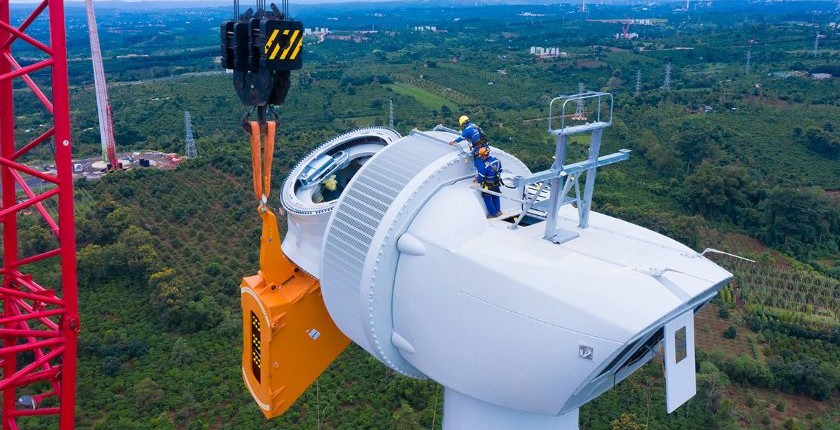
Photo: WindEurope


In the quarter through September, wind turbine orders in the European Union fell by more than a third from the same period of last year. The administration in Brussels urgently needs to resolve permitting issues and strengthen the wind energy supply chain, WindEurope pointed out.
The decline in wind turbine orders in the third quarter by 36% from the equivalent period of last year, to 2 GW, is part of a downward trend in the EU. In the first quarter of 2021, orders for wind turbines amounted to 2.8 GW and have generally decreased since then, WindEurope said.
Orders for new wind turbines fell to 2 GW in the quarter from July through September
Orders came from nine European countries and were all for onshore wind farms. Finland topped the list, with 322 MW, followed by Sweden and Germany.
Total wind turbine orders in the first quarter came in at 7.7 GW, far from what Europe needs to achieve its energy and climate goals, WindEurope said.
Inflationary cost pressures, slow permitting, and uncertainty over EU emergency interventions in the electricity market are stalling orders for new wind turbines.
According to the climate targets, the EU should have 510 GW in wind power plants in operation by 2030.
According to the ideal scenario for reaching climate targets, the EU should have 510 GW in wind power plants in operation by 2030. It translates to 39 GW of new wind turbines annually by the end of the decade.
Proposals to support the wind industry and appeal for political support
“The rapid deployment of wind energy has never been more urgent – for energy security, for the climate, and for affordable energy prices. This requires a step change in EU policy: to accelerate permitting of new projects, give renewables investors visibility, and strengthen and expand the European wind supply chain,” WindEurope said.
EU heads of state and government formally asked the European Commission last month to speed up the simplification of permitting in the wind sector. On the same day, WindEurope and SolarPower Europe called on the European Commission to submit an emergency regulation to the European Parliament.
The period from submitting the first application to obtaining the permit should last a maximum of two years
The use of renewable energy sources should be a matter of public interest for the EU, according to WindEurope. The organization proposed to shorten the period from submitting the first application to obtaining the permit to a maximum of two years.
National governments must clarify their approach to price limits for wind power producers so that investors can have a clearer idea of the revenues they can expect before embarking on new projects and orders for new wind turbines, WindEurope remarked.
Slow permitting and an insufficient market size continue to harm the European wind energy supply chain
The organization claimed slow permitting and an insufficient market size continue to harm the supply chain. The cost of raw materials, components, and international transport has risen sharply, increasing pressure on the European wind industry. It needs political support, WindEurope said.
Be the first one to comment on this article.