






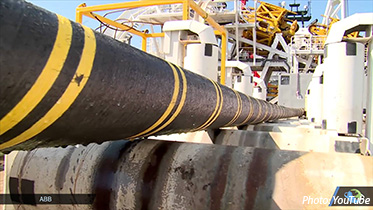


Connecting Italy and Montenegro by a submarine power cable is a priority for Terna SpA, company’s chief executive Matteo del Fante said. In a statement carried by Dnevne novine, he also marked the Balkan country as a bridge that will allow Italy to enter the Balkans energy market.
The focus of the Italian company in terms of interconnecting with the rest of the world will be better energy links with Corsica and the Balkans, he said. The transmission network from Tuscany, Del Fante added, dates back to the sixties and has limited capacity, which is why an alternative in the form of better supply is required.
When it comes to Balkan region, Terna’s head was clear – the priority is the project it is jointly implementing with government-controlled power transmission system operator Montenegrin Electric Power Transmission System (CGES), said the report, republished by portal CdM. In his words, the country’s energy market is small, but it is an entrance to the Balkans.
The undersea link, as well as overhead lines in Montenegro and Italy, will be finished in 2018. Through this cable power from the whole Balkans will be transported, the company said in a statement, asked whether Montenegro is generating enough electricity for the capacity of the line. Terna reminded Romania and Bulgaria have surplus of power for export, and that Serbia is now joining them as a supplier. In Balkans, there is already enough power for exports through the cable, the statement said.
The project of connecting Italy and Montenegro with a submarine line is worth almost EUR 1 billion. Italian company Terna is providing 80% of funding for the realization of the project, while CGES will contribute EUR 100 million, enough to construct the substation in Lastva and the landline towards Pljevlja. On January 25, 2011, Terna and CGES signed a contract about project coordination, which foresees that the government has an obligation to provide the rights to use state land, including the sea, necessary for implementing the part of the project in Montenegro.