





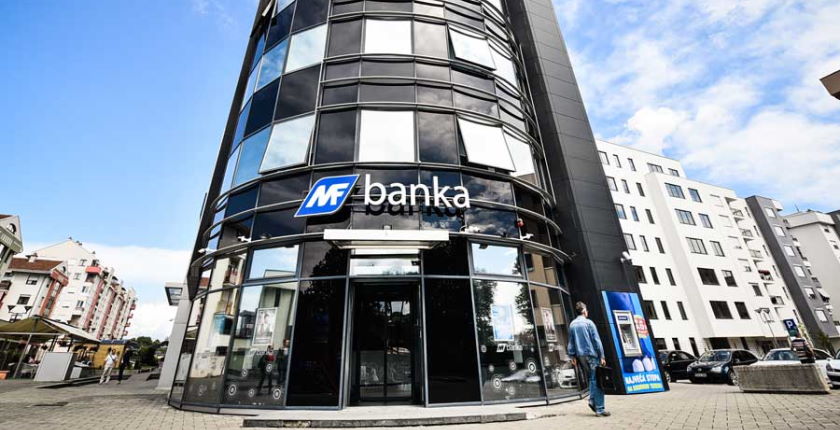
Photo: MF banka


The Green for Growth Fund approved a loan of EUR 5 million for MF banka in Bosnia and Herzegovina for on-lending to small and medium-sized enterprises.
The Green for Growth Fund (GGF) has formed a new partnership with MF banka in Bosnia and Herzegovina to expand access to green finance for small, and medium-sized enterprises (SMEs). A senior loan of EUR 5 million will be on-lent by the bank to businesses that want to implement energy efficiency and resource efficiency measures. The credit line is also available for small-scale renewable energy projects.
The investment is estimated to result in a reduction of greenhouse gas emissions equivalent to removing more than 1,000 passenger vehicles from the road for a year, GGF said.
MF banka is part of Mikrofin Group, a GGF partner since 2018
MF banka has an extensive network and vast experience in financing energy and resource efficiency measures, according to the announcement. The lender is part of Mikrofin Group, which has been a GGF partner since 2018. The investment is predominantly intended for energy efficiency measures in manufacturing, specifically wood processing and food processing, and construction and transportation.
“We are proud of this new partnership with MF banka as we believe it will strengthen our outreach amongst SMEs and corporate clients in Bosnia and Herzegovina, while simultaneously advancing our mission to boost energy efficiency and renewable energy across the region,” GGF Chairman Olaf Zymelka asserted.
The investment is predominantly intended for energy efficiency measures in manufacturing, construction and transportation
President of the Management Board of MF banka Bojan Luburic said the bank would be able to provide more favorable and affordable green loans for most of its SME clients. “We are aware of the impact of energy efficiency on the environment, but we know that the intensity of its implementation directly depends on financial precondition,” he stated.
The Green for Growth Fund invests in measures designed to cut energy use and CO2 emissions and improve resource efficiency in 19 markets in Southeast Europe, the Caucasus, Ukraine, Moldova, the Middle East and North Africa. The fund provides such financing directly to renewable energy projects, corporates and municipalities or indirectly via selected financial institutions.
MF bank from Banja Luka started its operations under the current name in July 2010, after the acquisition of former IEFK Bank by MCC Mikrofin.




Be the first one to comment on this article.