







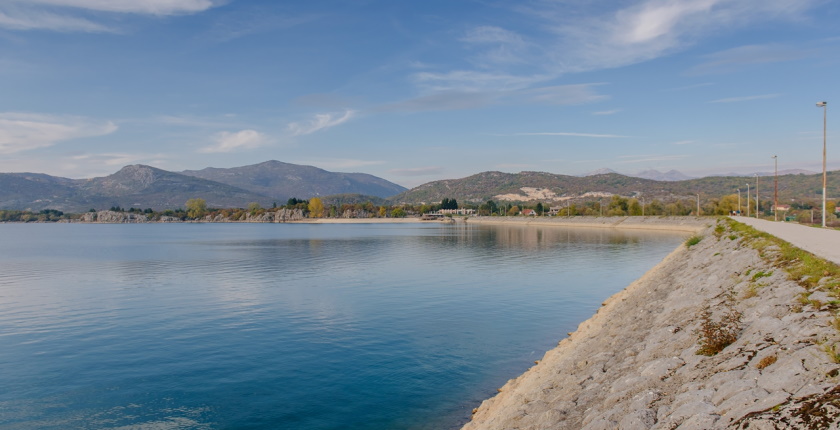
HPP Perućica (photo: EPCG)


Power utility Elektroprivreda Crne Gore (EPCG) has initiated the procedure of installing two solar power plants at dams at hydropower plant Perućica. The power plants will have a total capacity of 3.7 MW.
Installing solar power plants on dams or land near the lakes of existing hydropower plants is a practice used by many energy companies along with the energy transition in the region tracked by the Balkan Green Energy News portal. Such projects are being developed by Elektroprivreda Republike Srpske (ERS) from BiH, Dravske Elektrarne Maribor from Slovenia, KESH from Albania, Hidroelectrica from Romania, Elektroprivreda Srbije (EPS) from Serbia, while some projects have already been completed in Turkey.
EPCG has announced a tender to develop the preliminary design of solar power plants with connecting cables and substations on the Slano and Vrtac dams. These are dams of the HPP Perućica, the power plant with the largest installed capacity in Montenegro – 307 MW.
Dams offer a number of advantages for the installation of solar power plants
The Slano dam solar power plant, with a capacity of 2.2 MW, and the Vrtac Dam solar power plant, with a capacity of 1.5 MW, are planned to be built on the downstream slopes of the Slano and Vrtac reservoirs, according to the tender documentation.
According to EPCG, the advantages of dams for the installation of the photovoltaic power plants include a large, relatively flat area owned by EPCG, favorable conditions for connection to the grid, easy access to water for washing panels, and the creation of conditions for the construction of small hydropower plant Slano.
Some of these advantages, especially land and the conditions for a grid connection, could save time and money in developing every solar project. The combination of solar and hydro through hybrid systems is also recognized as a solution for the variability of both energy sources.
EPCG also wants to install a floating solar power plant on its lakes
According to the tender documentation, the deadline for submitting bids is December 15.
Of note, in addition to the construction of solar power plants on dams and land near the lakes of existing HPPs, companies are also installing floating power plants on these reservoirs. Statkraft has already built a floating solar power plant in Albania, and KESH is developing a project.
EPCG intends to do the same on the Slano lake within the Perućica HPP system.


Be the first one to comment on this article.