





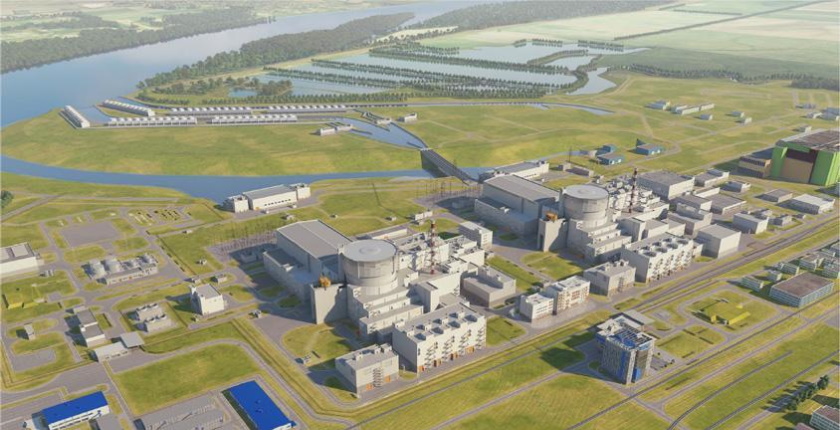
Photo: Paks II


Serbia is willing to become a minority shareholder of the planned nuclear power plant in the Hungarian city of Paks, said Serbian President Aleksandar Vučić after a meeting with Milorad Dodik, a member of the Presidency of Bosnia and Herzegovina.
A few weeks ago, Aleksandar Vučić announced that Serbia was interested in buying a 10% stake in a nuclear power plant in the region.
The president of Serbia said that he talked with Milorad Dodik about the energy crisis that threatens a large number of countries in the region and their “economic survival.” The question is whether they will be able to avoid a shortage of electricity, Vučić warned and added that some countries, like the UK, China, and Moldova, already have this kind of problem.
Serbia is ready to purchase a 5, 10, or 15% share in the nuclear power plant in Paks
The president of Serbia supported the statement by European Commission President Ursula von der Leyen on the importance of gas-fired and nuclear power plants as well as the statement by the First Vice President of the European Commission, Frans Timmermans, that Bulgaria will be allowed to complete the Belene nuclear power plant.
“We have already talked with Hungarian Prime Minister Viktor Orban about the construction of their nuclear power plant in Paks, and I reiterate our desire to be a minority shareholder,” Vučić said, adding that Serbia is prepared to pay for 5, 10 or 15% of the investment. The move would increase Serbia’s production capacities and secure enough electricity for the booming economy, he said.
Hungary is expanding the Paks nuclear power plant with Russia’ Rosatom
Hungary plans to expand its Paks nuclear power plant, whose existing four units have a combined capacity of 2 GW, accounting for 50% of the country’s electricity output. In June Hungary agreed with Russia’s Rosatom to speed up work on two new units under the Paks II project, with an installed capacity of 2.4 GW.
North Macedonia and Croatia also want to invest in nuclear energy
Serbia is not the only country in the region eyeing a share in one of the nuclear power plants that are being built. North Macedonia wanted to join the Belene project in Bulgaria, but gave up the plan in late 2020.
Croatia also wants to get involved in the construction of the second unit of the Krško nuclear power plant in Slovenia. Tomislav Ćorić, Croatia’s Minister of Economy and Sustainable Development, said in July that the Krško nuclear power plant is a safe and stable source of electricity.
Be the first one to comment on this article.