





Photo: Balkan Green Energy News
Published
June 10, 2021
Country
Author


Share


Published:
June 10, 2021
Country:
Author
Share
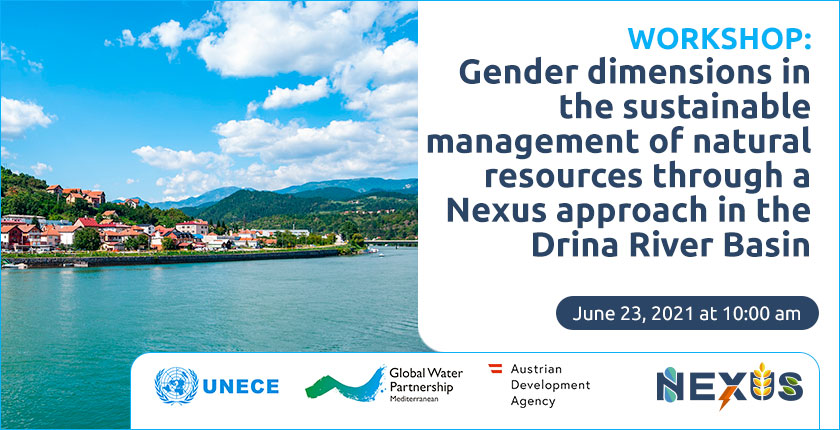
The challenges of sustainable management of natural resources in the countries of the Drina River Basin are numerous. The participants of the workshop “Gender dimensions in the sustainable management of natural resources through a Nexus approach in the Drina River Basin” organized by GWP-Med will try to examine the role of women and their contribution to finding solutions for those challenges through the Nexus approach.
The Drina River Basin is shared by three countries: Bosnia and Herzegovina, Montenegro, and Serbia. Home to more than one million people, the basin is rich in natural resources such as hydropower, wood, metals, and minerals. In addition, its rich and beautiful nature makes it a true tourist gem, while its fertile soil promises good yield and food security.
The countries of the basin are striving to improve their economies and societies. While working on this, they still face challenges in achieving growth without compromising the natural environment and the well-being of future generations.
The workshop will take place online on June 23. Its participants, including high countries’ officials, academia, local authorities, NGOs, and representatives of international organizations, will address some of the critical aspects of the Drina River basin’s development challenges, considering the needs of all people, including those who do not typically have a say in decision-making.
The workshop is a part of the project “Promoting the Sustainable Management of Natural Resources in Southeastern Europe, through the use of the Nexus approach” financed by the Austrian Development Agency (ADA), implemented by the Global Water Partnership-Mediterranean (GWP-Med) in partnership with the United Nations Economic Commission for Europe (UNECE).
For more information about the workshop and the participants, please visit the workshop’s agenda.
Nexus methodology
The Water-Energy-Food-Ecosystems Nexus (“Nexus”) approach has been introduced in the natural resources management agenda to enhance water, energy, and food security while preserving ecosystems and their functions.
The Nexus methodology provides an integrated and coordinated approach across sectors (energy, mining, agriculture, tourism, forestry), to reconcile potentially conflicting interests as they compete for the same scarce resources while at the same time evaluating the impact on climate change, environment, and society.
Gender with focus on local context and needs
The workshop will provide a brief overview of the latest trends in the global gender agenda. However, it will focus on the local context and needs.
Several case studies and projects that have been taking place in the Drina river basin during the last couple of years will be presented at the workshop. They will address some of the most pressing situations related to sustainable development, environmental protection, water, waste management, and how they affect women and the local population.
“Women are often affected by environmental impacts and suffer the consequences more than men. At the same time, they are under-represented in decision-making, while many jobs remain male-dominated in rural areas,” said Tassos Krommydas, GWP-Med’s programme officer.
Krommydas also added that there’s an overarching need not only to increase the capacities of women and involve them in every aspect of decision-making but also to address gender considerations in policymaking. It’s certainly positive that women are increasingly seen to lead environmental struggles.
In order to facilitate active discussion and provide a platform for women’s voices to be heard, the organizers plan to invite participants of the workshop to share their ideas and views on the possible solutions and what would be the way forward to provide sustainable solutions for concrete phenomena, while at the same time, the nexus approach is applied.




Be the first one to comment on this article.