





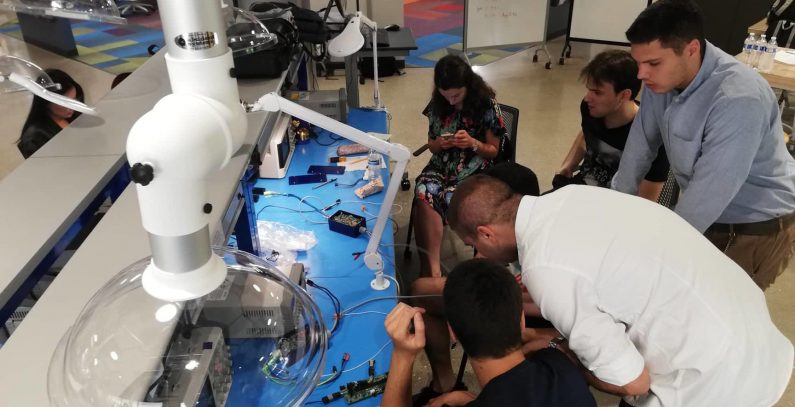
Photo: H-Bridges


High-efficiency e-drive with adaptive hardware and software, making it applicable to a wide range of batteries and machines – we are presenting the winning solution developed by the H-Bridges team of students from the University of Belgrade School of Electrical Engineering.
Even though the International Future Energy Challenge (IFEC) 2019 task was to develop an e-drive for a bicycle, the Serbian team designed its H-Bridges ADI48 device to be applicable to any Brushless DC (BLDC) or synchronous motor, providing more freedom in later production stages and making it commercially attractive.
“The hardware design involved a range of optimizations, making for energy efficiency of up to 98.7% when transferring battery energy to power an electric machine at peak load. Additionally, the designed algorithm for controlling the motor enables a fine-tuned control of the traction force, starting the vehicle with no pedal assist, and a range of other features when driving,” Aleksandar Milić, teaching and research assistant at the ETF, tells Balkan Green Energy News.
Adaptive hardware and software
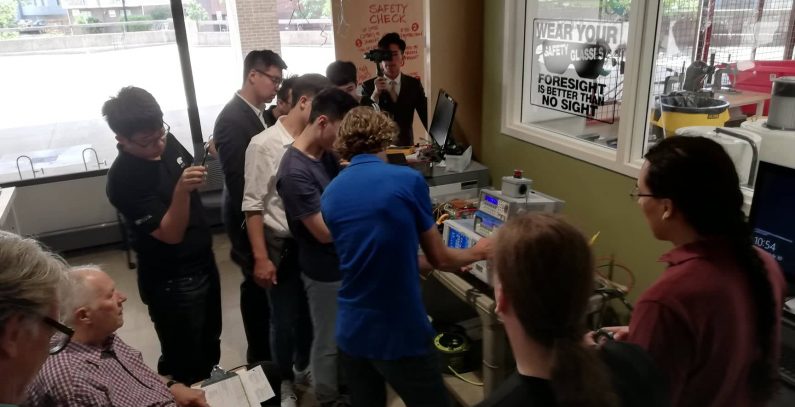
Milić, now officially the lead mentor of the H-Bridges team, tells us that the adaptive hardware and software is what makes the device commercially attractive.
The device designed by H-Bridges can power any BLDC or synchronous machine. The software is also adaptive and can be easily adjusted for any battery-machine combination – its application is not limited to the machine and battery used on the electric bicycle for the purpose of the competition.
“You can change all limits as desired, including the maximum power and speed you wish to develop… For example, if the e-bike is used by a child, you can set the speed limit at 15 kph, and if it is used by an adult, the speed limit can be set at over 40 kph,” Milić says.
Technical specifications
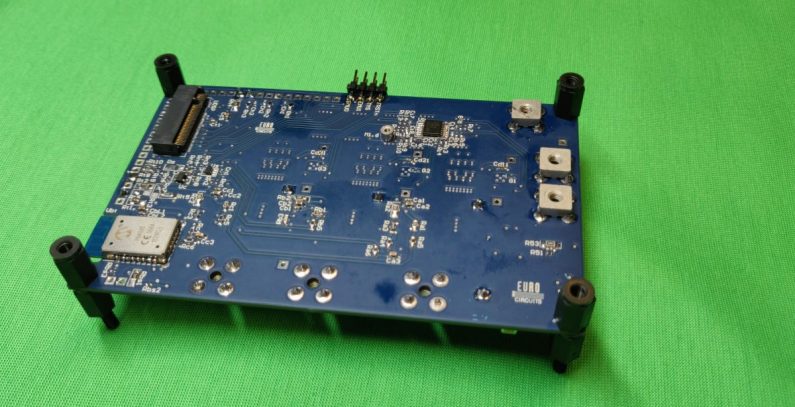
- Implemented protections:
- OC (overcurrent protection),
- OV (over voltage protection),
- UV (under voltage protection),
- OS (overspeed protection),
- OT (over temperature protection)
- Input parameters: 44-60V dc, 0-20A dc
- Output parameters: 0-15A ac (line) 0-34V ac (line-line) voltage
- Power: 880W
- Efficiency of up to 98.7% at maximum load
- 5kHz bandwidth of the current regulator
- Android user interface (an Android app was developed for a user to communicate with the device and obtain the necessary information)
- IP68 waterproof enclosure
Sponsors and partners
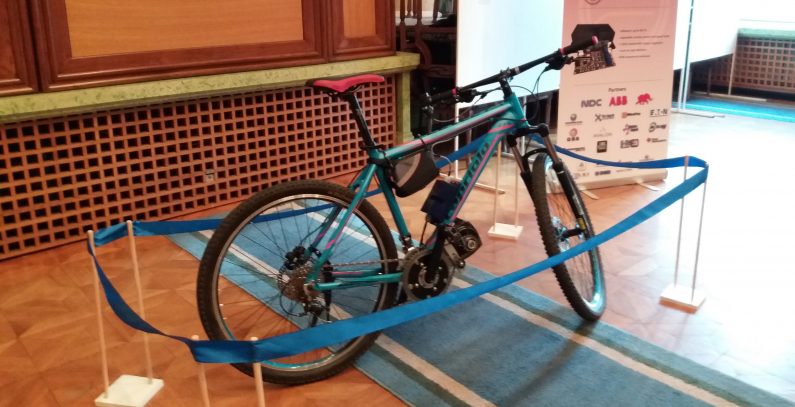
Companies that provided the H-Bridges team with various types of support during device development and the competition are:
- Typhoon HIL
- NDC
- ABB
- Mikro Princ
- Vetroelektrane Balkana (WEBG)
- Eurocircuits
- Eaton
- ICCE
- Elnos Group
- Elektro Zapad
- Avalon
- Global Substation Solutions
- ELEM & ELGO
- Hi-Tech Corp.
Balkan Green Energy News provides H-Bridges with media support.


Be the first one to comment on this article.