






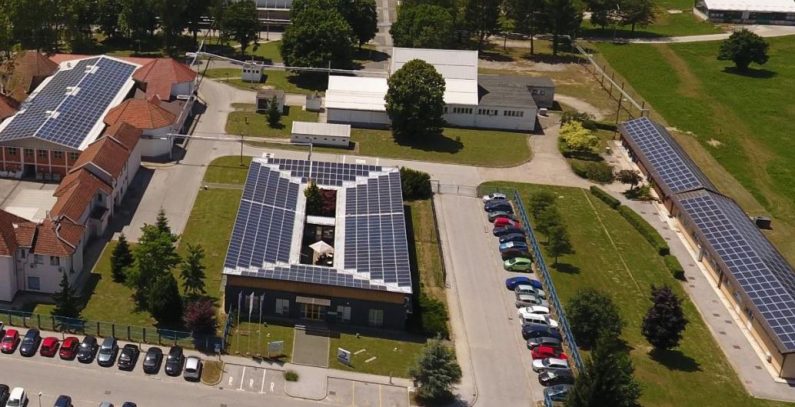
Photo: Genera (Dechra Pharmaceuticals)


Genera, the Croatian subsidiary of the UK-based veterinary products manufacturer Dechra Pharmaceuticals, has officially opened the country’s largest integrated solar power plant for self-consumption.
The integrated solar renewable energy facility, built under a GBP 1.3 million investment partially subsidized by EU funds, features 5,543 rooftop photovoltaic (PV) panels fitted at Genera’s plant in Sveta Nedelja, part of the Zagreb metropolitan area, according to Dechra’s filing to the London Stock Exchange (LSE).
The 1.5 MW solar power plant, commissioned in June this year and officially unveiled this week, is expected to produce around 1,545,000 kWh of electricity annually and generate nearly a third of the electricity needed for Dechra’s Croatian manufacturing facility.
Telecom operator Hrvatski Telekom, together with Enerco Solar, its partner for renewable energy sources, implemented the PV power plant project, which includes electric vehicle (EV) chargers, local media reported.
“The facility is now recognised as the largest integrated power plant for own consumption in Croatia. Any surplus electricity from the power plant is distributed to the municipal electrical grid,” the filing reads.
The power plant initiative will see Dechra de-risk the site’s energy supply by securing its own source of electricity via renewable sources, said Dechra CEO Ian Page.
The company expects the Zagreb site’s CO2 footprint by approximately 360 tonnes, which equates to 4% of the Dechra’s total CO2 emissions in 2018. It expects the solar power plant to allow it to lower variable costs, mitigate the risks of electricity price fluctuations, and have a direct impact on reducing the cost of goods sold in the future.
“Over the next five years we will be increasing manufacturing volume so, it is especially important from both a business and environmental perspective to utilise a renewable and sustainable energy source,” the filing reads.
The project to build the PV power plant for Genera’s own consumption was partly financed from the European Regional Development Fund (ERDF), under a subsidy agreement signed in June 2018 by Genera, the Croatian Ministry of Environmental Protection and Energy, and the Environmental Protection and Energy Efficiency Fund (FZOEU), local media reported.

Be the first one to comment on this article.