







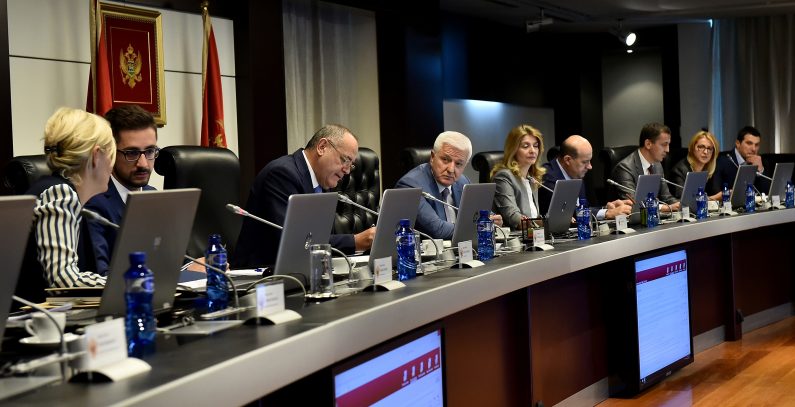
Photo: Government of Montenegro


The revised forest and forestry development strategy for 2014-2023, adopted by the Montenegrin government last week, envisages setting up a Timber Exchange. The document is aligned with the new concept of reorganizing the country’s forest concession system.
The revised forest and forestry development strategy’s key goal is to improve the condition of all forests in Montenegro, ensuring the forests’ balanced environmental, economic, and other roles and securing sustainability, the Montenegrin government said in a press release.
The revised strategy supports setting up new businesses on the services market in the forest use sector and seeks to improve the business environment by facilitating small businesses’ access to raw materials, the press release reads, noting that the goal is to set up a Timber Exchange in Montenegro. The new regulation’s implementation will encourage competition on the market, through the development of a more flexible timber trading system and the introduction of an accountability and trade control chain, according to the press release.
Over the coming period, market-based timber trade mechanisms need to be developed by setting up the Timber Exchange, to be backed by the state in terms of a strong regulatory role of a relevant authority, according to the text of the strategy.
All trade in unprocessed certified forest products (other than those for private forest owners’ needs and those backed by the state’s rural development incentives) is to be carried out through the Timber Exchange, which will be electronically linked with the Tax Administration and the Customs Administration, according to the text of the revised strategy.
The strategy further calls for establishing a central electronic system and control of trade in forest products, with trade in standing timber and logs to be carried out in a transparent way at lumberyards, in what is expected to boost competition and business revenues.
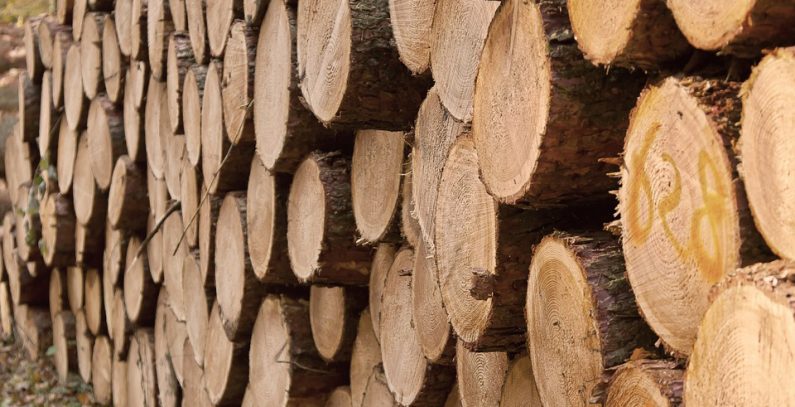
Forest products derived from logging and wood processing that can be used for electricity generation and heating systems should also be traded through the exchange (long-term contracts with users). This measure is expected to help resolve the piled-up environmental and safety problems connected to messy lumberyards, including fire hazards, according to the revised strategy.
The text further notes that the measures are expected to create a significant added value of forest resources, resolve environmental problems, and provide an opportunity for the creation of new green jobs.
According to the revised strategy, “large foreign investors have shown serious initiatives for large biopower plants” under “investments that would reach over EUR 150 million, though this would require additional and serious analyses.”
Forestry and lumber industry contribute less than 1% to national income
Montenegro has a major forest potential, with forests covering 59.5% of the country’s territory, or 826,782 hectares in total. The overall volume of standing timber is estimated at 122 million cubic meters, with an annual increment of 2.9 million cubic meters. The state owns 52.3% and private entities 47.7% of forest land in Montenegro.
Annual logging volumes are at 804,821 cubic meters, securing the sustainable development of the resource, according to the strategy.
However, forestry and the lumber industry contribute less than 1% to Montenegro’s national income, an insufficient share whose increase will be one of the top challenges for relevant state institutions, according to the text.
The text also notes that the implementation of the revised strategy in 2019 and 2020 will require about EUR 12.2 million.




Be the first one to comment on this article.