


News

Geothermal heating for smartphone-controlled garden

Published

June 24, 2015

Comments

comments icon

0

Share

Published:

June 24, 2015

Comments:

comments icon

0

Share

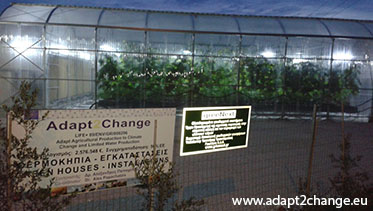
Prototype greenhouses have been developed by the Technological Educational Institute (TEI) of Thessaly within the LIFE+ programme co-financed by the European Commision, Athens–Macedonian News Agency said. In a report published by E-typos.com, project coordinator Alex Papachatzis noted the utilization of geothermal heat pumps reduces the use of solid fuels by up to 75% at times, while a closed-cycle system for water can bring its expenditure down even by 90% in addition to a significant increase in organic vegetable production.

Adapt2Change (Adapt Agricultural Production to Climate Change and Limited Water Supply) is a project worth over EUR 2.5 million, launched in Greece and Cyprus in 2009 by three universities, one research centre and one company. The technology from the largest LIFE+ project in Greece can be applied in agricultural industry – water usage, temperature and other conditions can be controlled from a smartphone, according to a report by Thessalia TV.
Related Articles

slovenia trucks fee pollution noise

Slovenia introduces air pollution, noise fee for trucks

16 February 2026 - The amendments to the Toll Act transpose the European Union’s Eurovignette Directive into national legislation

serbia azerbaijan gas fired power plant agreement

Serbia, Azerbaijan sign agreement to build gas-fired power plant

16 February 2026 - The combined cycle plant is expected to have an installed capacity of around 500 MW, with the investment estimated at EUR 600 million

bih hydrogen project energoinvest epbih H2OIE cei

BiH starts working on national hydrogen strategy

13 February 2026 - The implementation of the CEI Support to Hydrogen Strategy Development and Know-How Transfer for BiH project began in Sarajevo

barcelona spain solar capacity 50 GW

Spain’s solar power capacity tops 50 GW

13 February 2026 - Spain’s total solar capacity currently stands at around 50.2 GW, or 34% of the overall electricity generation capacity, according to REE