







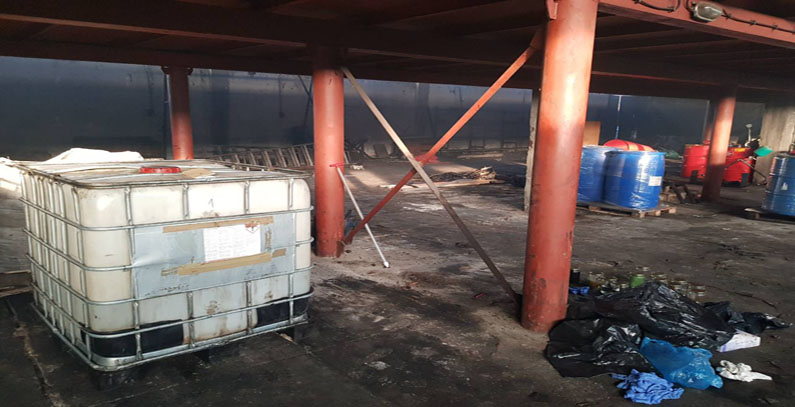
Photo: ekologija.gov.rs


More than 1,000 tons of toxic waste has been found on the grounds of the HINS factory in Novi Sad, the Serbian Ministry of Environmental Protection said adding that the waste was illegally stored at the site. The lease holder of the factory, which is in receivership, was issued a permit in 2012 to store a total of 32 tons of hazardous waste at the site and did not have the required paperwork for the rest, the ministry statement said.
A total of 1,080 tons of toxic waste was found in the operation conducted by the Ministry in cooperation with the Security Information Agency (BIA), the Basic Public Prosecutor in Novi Sad and the Vojvodina Provincial Secretariat for Urbanism and Environmental Protection.
Environmental Protection Minister Goran Trivan said he would demand the strictest punishment for whoever is responsible for the illegal storage of hazardous waste and added that the operation in Novi Sad and an earlier similar operation in Obrenovac marked the start of the combat the illegal storage of hazardous waste across the country.
Trivan warned that similar illegal and inadequate hazardous waste dumps exist across Serbia and called the population to help combat the problem.
The earlier operation in Obrenovac turned up 25 tons of illegally stored hazardous waste on land owned by the owner of the Nitor Trans company who was arrested over the incident. That toxic waste was buried in 89 barrels in the village of Vukićevica and was found to be cancerous. Spokespeople for the local authorities and experts said that industrial waste was polluting underground waters.
MOL Institute expert Ilija Brčeski said part of the waste was cancerous while another part was inert which according to him means it had to be processed and should not have been stored.
“This waste is a kind of bomb which would have polluted underground waters for decades. The tested samples showed the presence of benzols, benzenes and trichloroethylene,” Brčeski said, Serbian media reported.
An investigation has been launched to determine the origins of the hazardous waste found in Novi Sad and Obrenovac and experts are working to determine the level of danger to the health of the population at both locations.



Be the first one to comment on this article.