







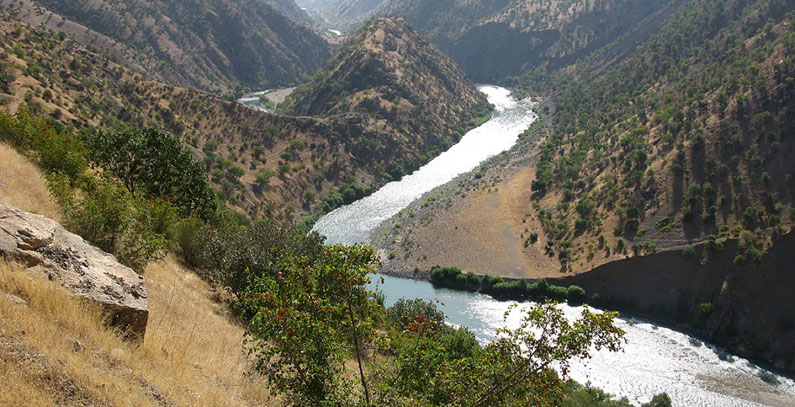
Photo: Statkraft


The Turkish power company Limak Enerji has bought the partly constructed Cetin hydropower plant from the Norwegian energy group Statkraft, the Turkish Anadolu news agency reported on it Energy Terminal site quoting Norwegian company officials. Statkraft said security concerns caused it decide to pull out of the hydropower plant project on the Botan river, which is one third complete.
Limak Enerji is planning to invest about EUR 340 million to complete the plant with plans to start operating it by the year 2021.
The Cetin power plant in southeast Turkey was to be Statkraft’s largest hydropower plant outside Norway. The company had to stop construction due to fighting between Turkish security forces and Kurdish PKK militants in 2016. The Norwegian company said in 2016 when construction was suspended that it expects to suffer losses of more than EUR 200 million.
The Cetin hydropower plant is located in southeaster Anatolia and was started before the collapse of a ceasefire agreed by the Turkish government and the Kurdistan Workers’ Party (PKK). Work on the construction of the power plant was suspended early in 2016 and construction was completed stopped in February this year.
The project called for two power plants with a total of 517 MW of installed power: the 401 MW Main Cetin plant and the 116 MW Lower Cetin plant about six kilometers downstream.
One of the Statkraft officials said the sale would be completed in the third quarter of this year and added that the total value of the deal will be announced on October 26 at the same time as Statkraft’s third quarter results.
Statkraft is sole owner of the hydropower project. The Turkish government issued the Norwegian company a 49-year license for the Cetin plant whose annual power output was planned to stand at some 1.4 terrawatts (TW). Under Turkish regulations, the plant was eligible for favorable tariffs for new renewable energy.
Statkraft entered the Turkish market in 2009 when it bought 95 percent of Yesil Enerji along with all of that Turkish company’s hydropower projects. It bought the remaining 5 percent of Yesil Enerji in 2010 and renamed the company Statkraft Enerji.


Be the first one to comment on this article.