

News

Wind park ZD2P gets construction permit

Published

November 3, 2015

Comments

comments icon

0

Share

Published:

November 3, 2015

Comments:

comments icon

0

Share

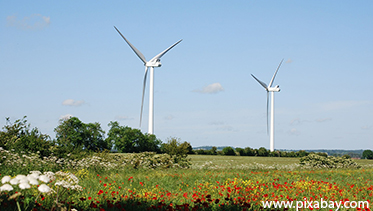
Croatian company Kunovac has received a permit from the Ministry of Construction and Spatial Planning for its wind project with planned installed capacity of up to 48 MW, SeeNews reported.

The construction of the power plant near the Adriatic town of Zadar, should be carried out in three phases – the first should see the deployment of three turbines, planned to be installed in the next two phases, official documents posted on the ministry’s website indicated.

Total installed capacity for renewable energy generation in Croatia amounted to 365.5 MW as of September 1, 2014, the latest data available on the website of energy market operator Hrote showed. There was 297.3 MW of wind power generation capacity, followed by solar with 30.1 MW and high-efficiency cogeneration plants with 13.3 MW.

Croatia targets a minimum share of renewable energy sources in total final energy consumption of 20% by 2020.

Related Articles

eet virtual meter electricity

Austrian EET rolls out AI-powered device to simplify home electricity metering

20 January 2026 - The metering device called the Virtual Meter deduces and delivers the entire home's electricity consumption data in under one second

KOSTT takes over land in Kosovo for battery system in US-funded project

KOSTT takes over land in Kosovo* for battery system in US-funded project

20 January 2026 - KOSTT obtained the 2.3 hectares of land for its 45 MW battery project, funded by Millennium Challenge Corp. of the United States

croatia hep koncar hpp varazdin contract

Croatia’s HEP to invest EUR 157 million in HPP Varaždin

19 January 2026 - HEP and Končar have signed a contract for the reconstruction of the generating units at the Varaždin hydropower plant

IRENA Global daily flexibility needs are quadrupling by 2050

IRENA: Global daily flexibility needs are quadrupling by 2050

19 January 2026 - IRENA expects the world's electricity system flexibility needs, on a daily timescale, to quadruple by 2050 from the 2019 level