






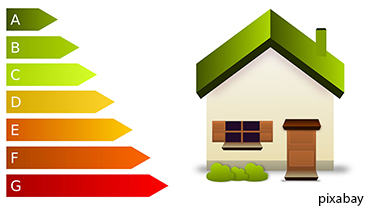


Serbia is coming closer to another heating season, and its energy efficiency level is low. Standard of living is much lower than in the European Union, and citizens spend two times more energy than the population in the bloc’s developed countries, state-owned Tanjug news agency said. For instance, the report adds, yearly power consumption per housing unit is close to the top of the list in Europe with 200 kWh, while the EU average is 140 kWh.
Uninsulated buildings, seen in great numbers in Serbia’s south, are especially inefficient, but industry and other businesses also consume too much energy, experts say. The state is obliged to cut final consumption by 9% by 2018 compared to levels from ten years before, when ten million tons of oil equivalent was spent. Assistant energy minister Miloš Banjac, responsible for renewables and energy efficiency, said certification of electric devices will be introduced. He claims there is no need for big projects, and that energy efficiency is increased through state funding. This year’s budget is RSD 180 million (EUR 1.5 million), and 11 projects for public buildings that are being completed account for half, Banjac said. The other 750,000 will be allocated after a public call set for late September, he stressed and added the procedure will be based on energy passports for buildings and completed by the year’s end. The assistant minister announced a donation of EUR 439,500 to the fund, for co-financing next year’s projects with 50% in collaboration with the government and local authorities.
A network of energy managers is to be established, with the aim to identify and implement energy efficiency measures for municipal governments, public enterprises and other institutions, the article adds. Recently a Central Registry of Energy Passports has been established for buildings, and a national typology for public objects is underway to help define ways for savings. Local self-government in capital Belgrade estimates the city, which consumes half of the country’s heating, needs up to seven years to introduce tariffs proportional to thermal energy use, Tanjug’s report said. This is because 60% of buildings have insufficient insulation, so two fifths of the population would have to pay significantly more than now for district heating.