


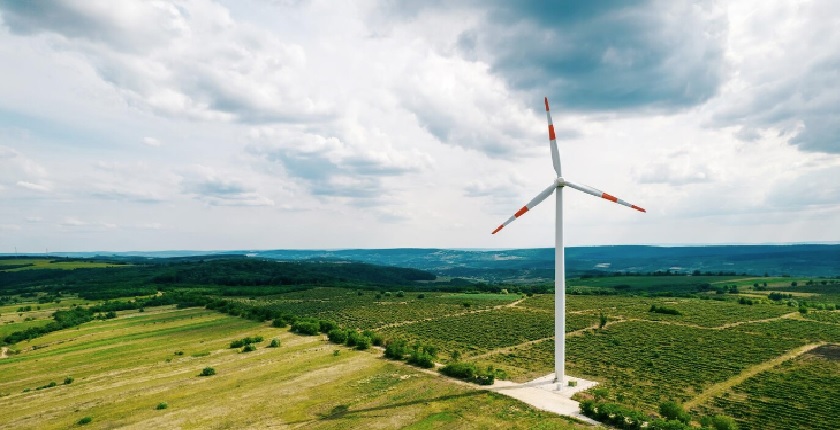
Greece’s revised National Energy and Climate Plan (NECP) leads to an imbalanced renewable energy mix, according to the Hellenic Wind Energy Association (HWEA or ELETAEN).
Specifically, the document calls for 13.5 GW of solar installations by 2030 and 8.9 GW of onshore wind farms plus another 1.9 GW in offshore wind. In total, renewable energy is expected to reach 75.9% of power production.
HWEA said during the public consultation that, according to various studies, the optimal renewables mix should be 60% wind energy against 40% solar power.
If the imbalance is corrected in the final NECP, Greece will benefit from fewer curtailments, an increase in green electricity exports as well as a drop in energy costs for its consumers, according to the association.
One example is the effect of wind power on imports. Based on the NECP, in 2025 the added cost of importing electricity will be EUR 6 per MWh, corresponding to to 4.1% of the total cost for consumers. By 2030 it is projected to drop to EUR 3 per MWh ord 2.2%, respectively, but HWEA believes that Greece can reduce it even further if more wind energy is supported.
Based on all the above, HWEA is asking for a licensing procedure based on a 60-40 mix, for priority curtailments to target projects that exceed national goals, and public promotion of wind energy.
Conspiracy theories must be stopped
HWEA also highlighted the extreme misconceptions and fake news regarding wind energy in the country.
“Often monstrous lies and conspiracy theories are circulated. They dominate the internet and even though only a small part of society believes them, they create a toxic climate leading to delays for new projects,” HWEA’s Chairman Panagiotis Ladakakos said.
Ladakakos: Give priority to wind farms with the most potential
Public reactions to wind farm projects were always an issue in Greece. However, recent years have seen a steep rise in fake news and the unwillingness of local licensing bodies to greenlight new investments.
“If priority is not given to the wind farms with the most potential, then the energy costs will not drop as much as they otherwise could,” Ladakakos added.