


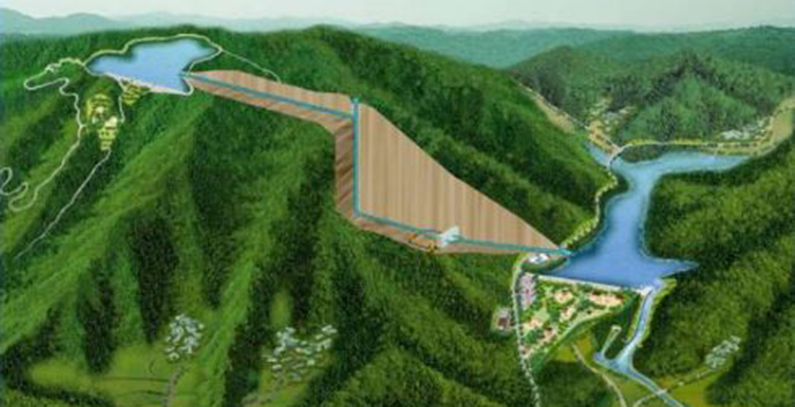
Romania’s Forecast and Strategy National Committee (CNSP) is starting a procedure to find a private partner for the pumped-storage hydropower plant Tarnita-Lapustesti, Romanian media reported.
The CNSP has published a study for the development of the Tarnita-Lapustesti project under the public-private partnership (PPP) model.
According to the study, the HPP is essential for the stability of the energy system of Romania.
The projected capacity of the pumped-storage HPP is 1,000 MW, while the project value is estimated at EUR 1 billion, the study finds.
The Tarnita-Lapustesti project is also mentioned in Romania’s draft Energy Sector Strategy for the period 2018-2030, with other strategic investments including new units, 3 and 4, at the Cernavoda nuclear power plant, a 600 MW coal-fired power plant at Rovinari, and the hydro-technical complex Turnu Magurele – Nicopole.
The draft Energy Sector Strategy for the period 2018-2030 is mentioned in the study prepared by the CNSP.
The document sees the need for power plants that could offer balancing services for intermittent renewable energy sources, as the construction of power plants that use these sources will continue to be a trend in the energy sector.
The study finds that there is not a single country in Europe that has not built at least one pumped-storage HPP which is used by the country’s transmission system operators (TSOs) if there are favorable physical conditions.
This includes Romania’s neighbors Serbia, Bulgaria, and Ukraine, leaving Romania with 20 to 25 years behind in terms of technical development in storage capacities, according to the study, Romanian media reported.
A lack of electricity storage capacity could hinder power sector development in medium to long-term.
Experts in Romania are divided on the need to implement the Tarnita-Lapustesti project.
The ones against it say it cannot be profitable, while those who back it say this kind of facility will find its role on the balancing services market.