







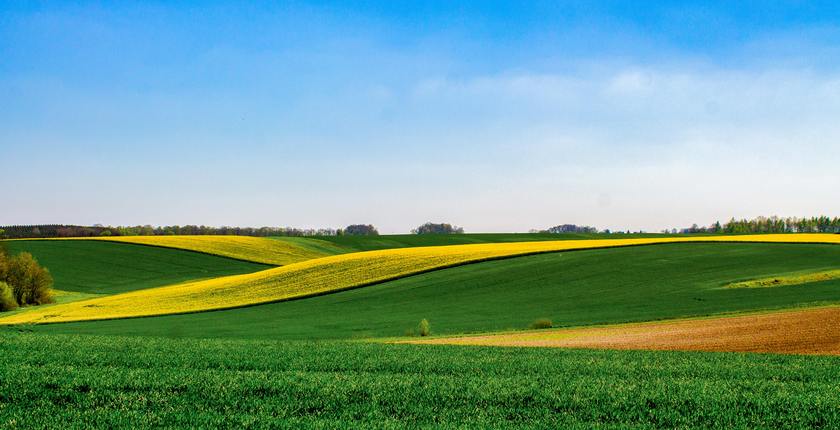
Photo: Pexels


Romania is drafting legislation that would enable granting concessions for the construction of renewable energy plants on unproductive and degraded state-owned agricultural land. The initiative aims to establish fast-track areas for renewable energy projects, with all necessary permitting procedures limited to 12 months.
The legislation would allow the State Domains Agency (ADS), which manages state-owned agricultural land, to grant concessions on areas of land that are not suitable for agriculture, but can be used for green energy production, according to a report by Profit.ro. The initiative is part of the RePowerEU component of Romania’s National Recovery and Resilience Plan (NRRP).
These areas should be officially designated following a mapping process to identify available land, subsurface, marine, or inland water areas needed for developing renewable energy power plants, as well as related grids and energy storage facilities, including thermal storage, to support achieving the 2030 renewable energy target.
The areas for renewable energy projects will be designated after a mapping process
The deadline to designate these areas is February 21, but it is unlikely to be met, given that a contract to procure the necessary geospatial data management software has been partially cancelled. The ADS has now launched a new tender for the geospatial data system, valuing the job at RON 7.7 million (around EUR 1.51 million), according to Profit.ro.
In the so-called “areas suitable for accelerating renewable energy projects,” the procedures for granting all necessary legal authorizations would not take more than 12 months in total, according to the report.
The Romanian Government has long planned to amend the law on the ADS to give it the authority to award concessions to public and private entities for the purpose of producing energy from renewable sources such as hydro, solar, wind, biomass, and geothermal, the news portal recalled.
State-owned power utility Hidroelectrica, the largest electricity producer in Romania, intended to build a photovoltaic park of 1.5 GW on thousands of hectares of land managed by the ADS. It would be the largest in Europe.
Be the first one to comment on this article.