







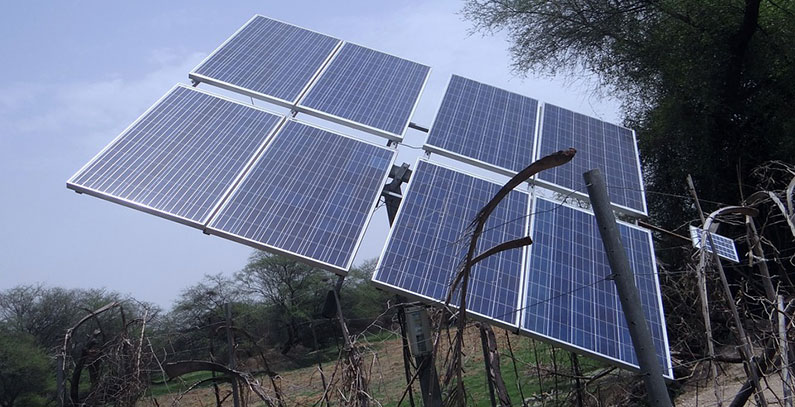
Photo: Pixabay


The Government of the Republic of Srpska intends to change the law on concessions and ease the regulations for installing solar photovoltaic (PV) facilities on land by households and companies.
The government has recently adopted a bill to amend the Law on Concessions in a move to ease the interpretation and implementation of the law.
Small ground-based PV systems with installed capacity of up to 250 kW will not be subject to concession
In addition to the already defined exemptions, small ground-mounted PV power plants, with an installed capacity of up to 250 kW, cannot be subject to concession procedure, it said. According to the government’s website, it was the most significant change in the package compared with the draft and a result of the parliamentary debate.
New provisions of the law enable interested parties – households and companies to invest in small PV facilities
The Ministry of Mining and Energy of the Republic of Srpska told Balkan Green Energy News the solution would enable a greater number of interested parties – households and businesses – to invest in such facilities, and added solar power doesn’t have a negative impact on the environment. The applicants won’t be obliged to sign a concession contract if the bill is passed.
Citizens and companies in Herzegovina show great interest to install PV panels
According to local media, during the debate on a draft law on concessions in the National Assembly, member of parliament Ilija Tamindžija suggested the document should be changed in order to exempt the installation of PV facilities of up to 250 kW from the concession procedure.
Small solar power plants do not have a negative impact on the environment
He added small solar power plants don’t have a negative impact on the environment and asserted that there is strong interest from households and businesses to install them, especially in Herzegovina, the southern part of Bosnia and Herzegovina.


Be the first one to comment on this article.