


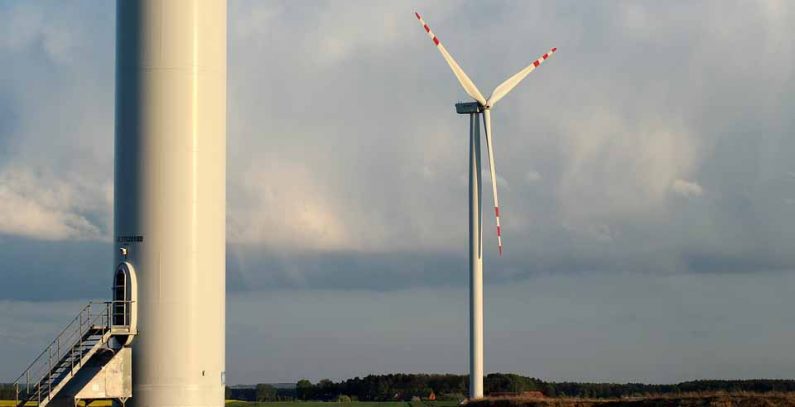
The municipality of Nevesinje is closer to the realization of two wind farm projects – Trusina and Grebak – according to announcements on the municipality’s website.
Zlatko Mandžuka, top man of Nevesinje-registered energy firm Eol Prvi, said that he expects the construction permit to be issued and a wind turbine purchase agreement signed with Denmark’s Vestas in the coming days for the Trusina wind farm.
The Trusina wind farm should launch production in late 2019, according to Mandžuka.
According to the municipality’s announcement, the Trusina wind farm, a project worth BAM 140 million (EUR 71.5 million), is designed to have 15 turbines, an installed capacity of 49.5 MW, and an annual output of around 160 GWh of electricity.
The UK-based Kermas Limited, owned by Croatian businessman Danko Končar, has an 87% stake in the project, with Eol Prvi holding 10% and the municipality of Nevesinje 3%. Russia’s Sberbank in Banja Luka heads a banking consortium to finance more than two-thirds of the project.
The Republika Srpska government issued a 30-year concession for the project back in 2012, according to the municipality’s announcement.
Regulatory steps expected for 52 MW Grebak wind farm
Meanwhile, Miralem Čampara, executive director of the Grebak wind farm project, said that he expects a concession for the project to be awarded by September.
The Grebak wind farm, a project worth EUR 65 million, is projected to have 14 turbines and an installed capacity of 52 MW, according to the municipality’s announcement, issued following a meeting with representatives of VE Grebak, the project investor.
Nevesinje’s municipal assembly will discuss the adoption of a regulation plan for the wind farm at its next session, after which the government of the Serb entity of Bosnia and Herzegovina should issue a concession, according to Slobodan Šiljegović, head of the municipal department of spatial planning and housing and utility affairs.