



Montenegro’s transmission system operator CGES has signed agreements on connecting two more planned solar power plants, with a total installed capacity of 615 MW. The investors are Sun Horizon, and Obnovljivi Izvori Energije.
In mid-June, TSO CGES inked its first grid connection agreement for a solar power project. The three projects have a total capacity of more than 1,000 MW.
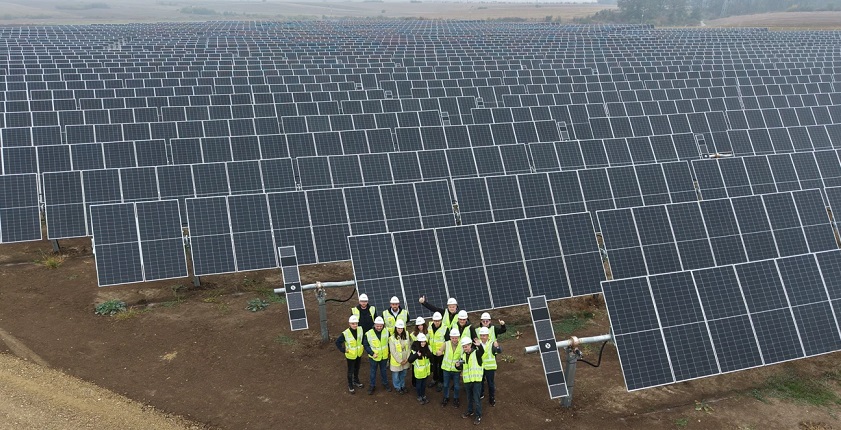
The contract on the connection of the 400 MW Montechevo solar power plant, was signed by Ivan Asanović, CEO of CGES, and Darija Gazivoda, executive manager of Sun Horizon. The investment is estimated at EUR 350 million.
The firm is a subsidiary of CWP Europe, one of the leading companies in the development of renewable projects in South-East Europe.
According to CGES, connecting Montechevo implies the construction of the 400 kV Čevo switchyard (RP Čevo), one of the largest in the region. It will consist of four 400 kV power lines: Lastva-Trebinje, Lastva-Pljevlja, and Lastva-Podgorica.
In addition to higher connection capacity, the technical solution would enable better performance of the transmission system, because it eliminates the possibility of a simultaneous outage of the 400 kV transmission lines towards Trebinje and Pljevlja.
CGES: The grid is largely prepared for the integration of new renewable power plants
The agreement defines a dynamic plan, which foresees that the Montechevo project and RP Čevo would be built by the end of 2027.
CGES said the integration of renewable electricity facilities into the existing grid poses technical challenges, but that power lines are largely prepared.
The company stressed that it invested a vast amount of funds in grid upgrades and that it would continue such activities and work on new regional projects.
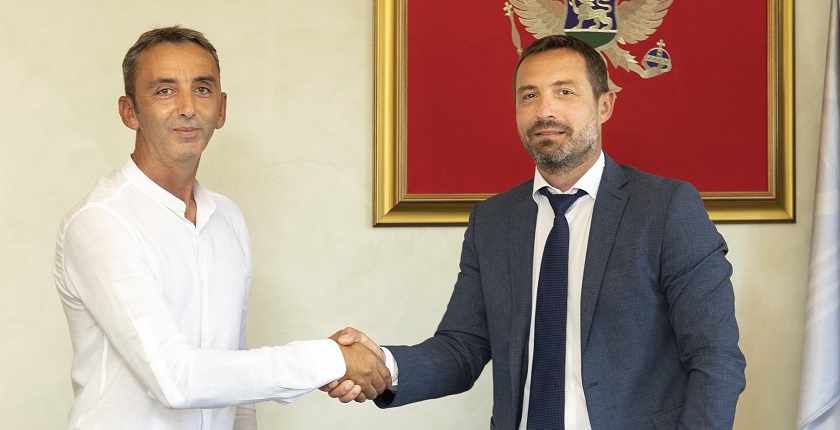
Asanović and Rusmin Muslić, executive manager of Obnovljivi Izvori Energije, signed the second contract, for the Prediš photovoltaic plant. It is planned at 215 MW in capacity, while the investment is valued at EUR 180 million.
The solar power facility will be connected via a 400 kV transmission line to RP Čevo, CGES added.
Of note, a large number of utility-scale PV projects are under development in Montenegro, but none are under construction yet.
In other news, the Government of Montenegro issued urban planning and technical requirements for the preparation of technical documentation for a 100 MW project.
The location is near Nikšić, in the Vraćenovići settlement. The request for the solar power project was submitted by Agenos Energy from Podgorica.