


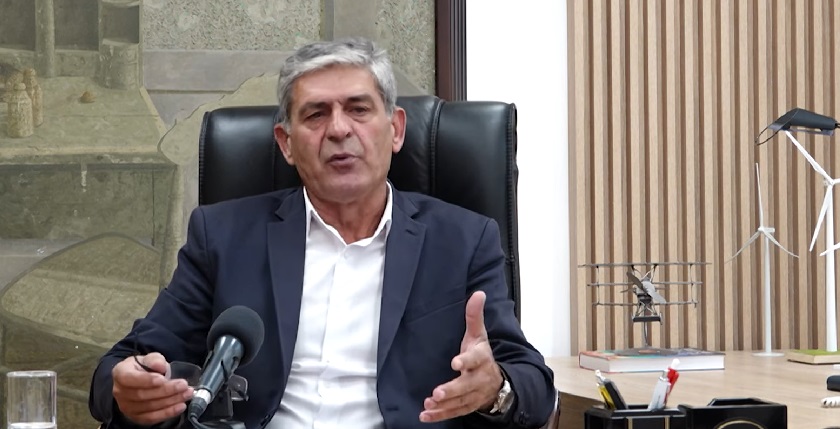
The pause in the operation of the Pljevlja coal power plant in Montenegro, planned for 2025 within its so-called ecological reconstruction, could be postponed to 2026, according to Miro Vračar, assistant to executive director of state-owned power utility Elektroprivreda Crne Gore (EPCG). He also said the drought weakened hydropower production and revealed that the company would build wind farm Gvozd 2.
The delay in the preparation of project documentation and the procurement of equipment will probably postpone the ecological reconstruction of coal-fired power plant Pljevlja for 2026, RTNK reported.
EPCG will see with the contractor whether it is prepared to proceed to the standstill next year, Miro Vračar said. “Our assessment is that it isn’t,” he stressed and added that the plan for a suspension in the operation of the facility in 2025 isn’t final.
In April 2022 EPCG kicked off the ecological reconstruction of TPP Pljevlja to bring its emissions in line with the European Union’s standards and extend its lifespan. It would also fulfill its obligations within the Energy Community.
Hydropower production is below plan
The most important part of the reconstruction is halting the operation of the power plant for six to eight months. It would significantly lower the domestic production of electricity because Pljevlja, which has 250 MW, accounts for almost 40%.
Early this year, Minister of Energy and Mining Saša Mujović noted that the standstill would force Montenegro to import large amounts of electricity, valued at EUR 160 million.
Vračar also said that due to bad hydrology, production in hydropower plant Perućica in the first eight months of the year was 18% lower than planned, compared to the underperformance of 7% at EPCG’s other major hydroelectric facility, Piva.
Stronger wind turbines for the Gvozd project
This summer Montenegro imported electricity. Vračar stressed that the company was purchasing it when it was cheapest, around noon, and selling in the evening, when it was seven to 10 times more expensive. EPCG hopes that in the last quarter hydrology will be better, which would improve the energy and financial balances, he added.
Regarding the Gvozd wind farm project, Vračar said the construction, planned to start in the second quarter, was postponed because of a change in wind turbine capacity.
Instead of 12, EPCG will install eight stronger turbines, opening the way for the Gvozd 2 project because then four fields are left for windmills, which will have 25 MW combined, Vračar said.
The total capacity of the wind farms will be 80 MW to 85 MW, in his words.