








Photo: Sergio Cerrato - Italia from Pixabay


Power utility Elektroprivreda Crne Gore has launched its second battery energy storage system procurement tender. The required capacity is drastically lower than in the first call.
The initial public procurement was canceled because state-owned energy company Elektroprivreda Crne Gore (EPCG) didn’t obtain approval from the Government of Montenegro to take a loan for a EUR 58 million project.
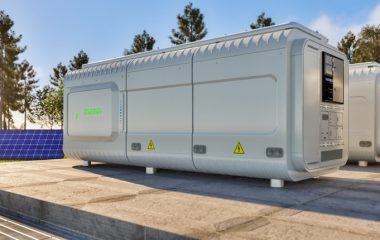
The new tender envisages the procurement of a battery between 100 kW and 130 kW, with 200 kWh to 260 kWh in capacity. This is a pilot project, and the procurement is valued at EUR 75,000.
The canceled purchase was for two battery energy storage systems (BESS), at 30 MW and 120 MWh each.
The battery will be used on the distribution network
Potential locations include hydropower plant (HPP) Perućica, EPCG’s steel mill Željezara Nikšić, and the Pljevlja thermal power plant.
In the new call, the winning bidder will be obliged to secure a location for installing and testing the pilot BESS, according to the documentation.
EPCG explained that over the previous three years, its projects Solari 3000+, 500+, and 5000+ enabled a strong pace of the addition of prosumer solar power plants to the low-voltage, distribution network in Montenegro.
Although distributed generation has clear financial and ecological benefits, its rapid growth simultaneously brings a string of technical challenges for the distribution network, which was historically developed solely for supplying consumers and for unidirectional energy flow, according to the tender’s documentation.
EPCG sees the installation of batteries in substations as a solution to technical challenges caused by prosumers
The company sees the installation of BESS units within 10/0.4 kV substations as the solution for these challenges.
These batteries would be charged during the hours when photovoltaic facilities have high output in order to reduce and prevent reverse power flow. The idea is to discharge BESS units during hours of peak consumption and low voltage.
The main goal is to minimize voltage deviations in areas that the substations cover, during periods of production and consumption fluctuations. It would increase the hosting capacity for new prosumers, and enhance the stability of the distribution grid under an increased PV plant integration.
Scalability of the battery is one of the conditions for the bidders set by EPCG.


Be the first one to comment on this article.