






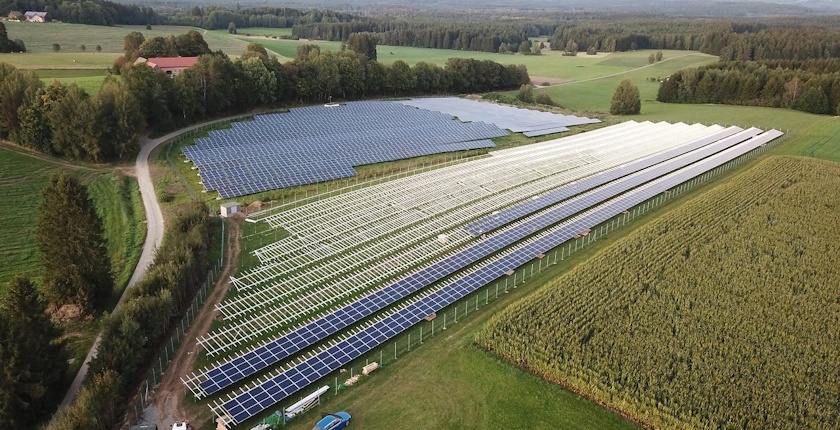
Photo: Samuel Faber from Pixabay


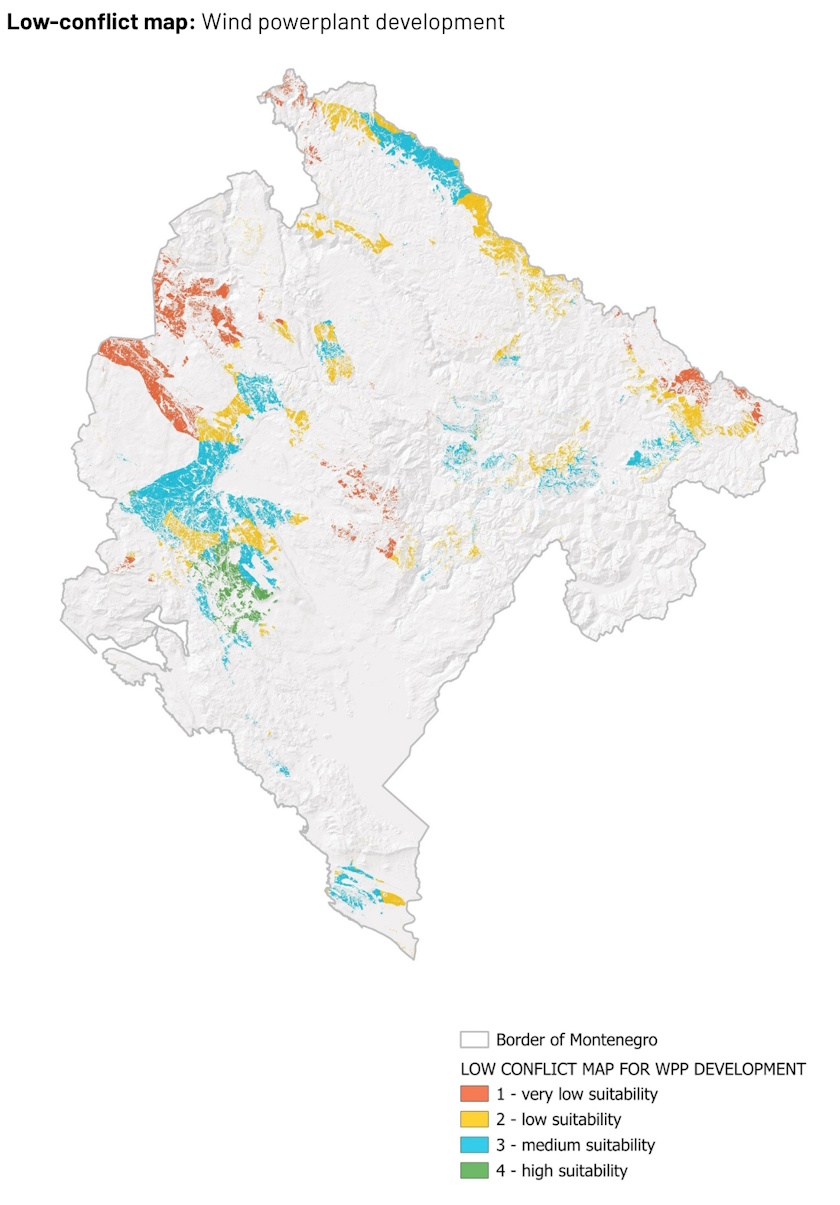
Montenegro hosts low-conflict sites with high development potential for solar and wind power plants totaling 16.300 MW, according to the findings within the Montenegro Energy Growth and Acceleration (MEGA) project, implemented by global environmental organization The Nature Conservancy and Montenegrin NGO Eco-Team.
These sites avoid conflict with areas of high biodiversity or social value, according to The Nature Conservancy (TNC). The organization’s smart siting approach is based on a robust data collection, analysis and presentation methodology to identify these locations. It has made similar studies for North Macedonia, and Serbia.
The primary product of the study is granular mapping of renewable energy development potential across Montenegro, including sites suitable for the designation of renewable acceleration areas (RAAs).
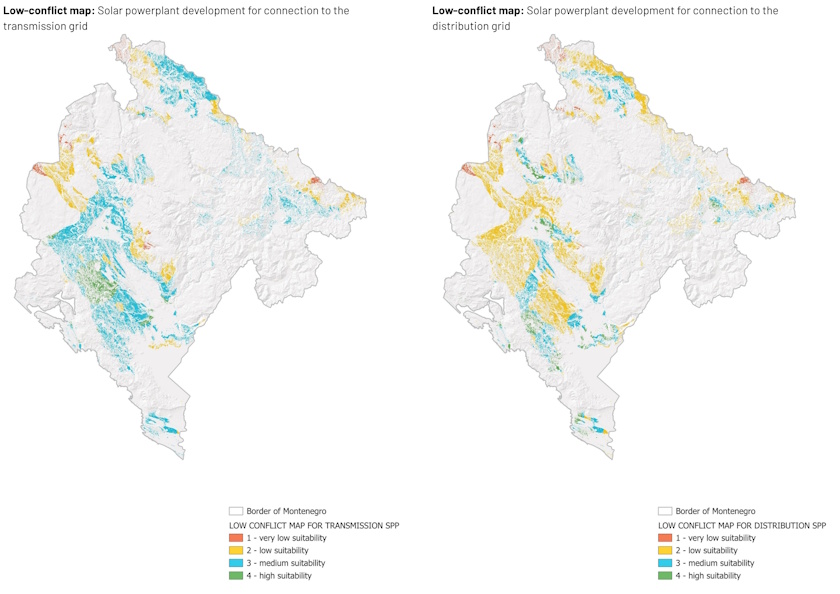
Eco-Team Executive Director Milija Čabarkapa said that wind, solar power plants installed in locations characterized by minimal conflict and high development potential could generate more than 21 TWh.
Čabarkapa: Use the study
It is six times more than Montenegro’s current annual electricity production, he stressed.
Čabarkapa called institutions and investors to use the study as a tool for planning, decision making, and acceleration of the sustainable energy transition in the country.
According to the study, a combined capacity of 15,630 MW for smaller and larger solar power plants has been identified, spanning an area of 156 square kilometers. For wind farms, the identified capacity is around 650 MW over approximately 65 square kilometers.
Brownfields have huge potential
This potential combined capacity is approximately 17 times larger than the current installed capacity of all energy plants in Montenegro, the study reads.
The study sees brownfields – areas such as landfills, former industrial sites and quarries, as a sensible first target for development of renewable energy. Their use avoids converting more valuable natural or agricultural areas and allows already existing infrastructure to be utilized.
Around 346 MW of combined solar distribution and transmission capacity can be developed in the low-conflict areas with a medium to high development potential, with power production enough to replace one third of the current generation from the Pljevlja coal power plant, according to the study.
Vejnović: I hope it will be used
TNC Southeast Europe Program Director Igor Vejnović said the project is addressing the two biggest ecological crises – the drastic decline in the number of animal and plant species and the climate crisis.
He noted that Montenegro has a high level of biodiversity at both the European and global levels. Vejnović also recalled that two years ago, a similar project was implemented in Nikšić as an interim step.
Now, an analysis has been conducted at the national level, and he hopes it will be used.
TNC is very active in implementing its smart siting approach
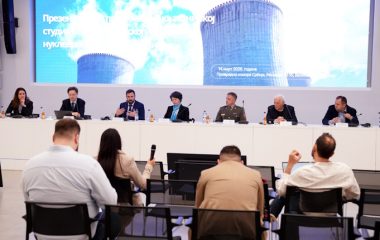
The study presentation was also attended by Mirjana Kojić, Acting Director at the Montenegrin Investment Agency, Matija Medojević, State Secretary at the Ministry of Energy and Mining, and Aleksandra Bujaroska, Senior Expert in Environmental Governance, Permitting and Planning at Energy Community Secretariat.
The MEGA project was supported by competent ministries, international financial institutions and the Energy Community Secretariat.
Of note, TNC is very active in promoting its smart siting approach.
In February 2025, TNC and the Energy Community Secretariat released a comprehensive guide for identifying and designating priority areas for renewable energy development that minimizes environmental and social conflicts.
Four months earlier, together with SolarPower Europe, TNC prepared a policy paper to explore how solar parks can support the European Union’s nature protection and restoration goals while creating a win-win for renewable energy and biodiversity.

Be the first one to comment on this article.