


The list of priority infrastructure projects of the Government of Montenegro includes nine energy projects, estimated at EUR 1 billion in total, and 81 in the environmental protection sector, worth an overall EUR 885 million.
The updated list of priority infrastructure projects, introduced in 2018, contains 154 projects with a total value of more than EUR 6.3 billion. Projects also apply to transport, communal infrastructure, education, health, culture, sports, digitalization.
They should be financed by the state budget, state-owned companies, loans, European Union grants, and public-private partnerships. Their strategic importance for the country ranks the projects.
The most important energy project is the Montenegrin part of the Trans-Balkan Corridor
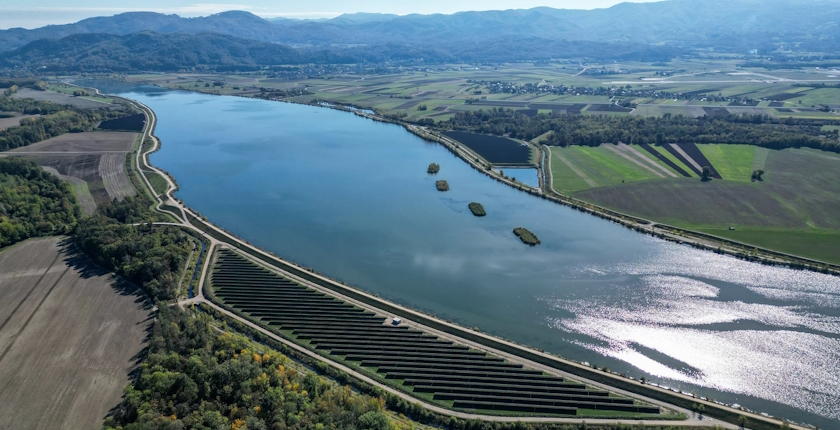
In the energy sector, the most valuable project is the construction of the EUR 271 million HPP Komarnica. Among the new power plants are also the Gvozd wind farm and the Slano dam solar power plant.
The feasibility of the ecological reconstruction of the Pljevlja thermal power plant, with the heating system of the city of Pljevlja, is still discussed. Still, it is on the list of priorities.
The project of the Montenegrin part of the Trans-Balkan Corridor, an investment of EUR 93 million, is the first of all projects in the energy sector in terms of strategic relevance. When it comes to the electricity transmission system, the list also includes the smart grid program of the TSO CGES, and the project for the creation of technical conditions for connection of renewables.
In the distribution network, it is planned to introduce a smart grid and smart metering system worth EUR 35 million.
The Ionian-Adriatic gas pipeline is also one of the priorities
An investment of EUR 109 million is planned to improve energy efficiency in public buildings.
The Ionian-Adriatic Gas Pipeline (IAP) is ranked sixth on the list. It should provide Montenegro with natural gas supplies. Of note, two weeks ago, the state-owned power utility Elektroprivreda Crne Gore (EPCG) announced its plan to build gas power plants.
The following environmental protection projects are on the list:
- Improvement of water supply – 19 projects
- Improvement of wastewater management system – 27 projects
- Waste management – 20 projects
- Nature protection – 6 projects
- Flood protection – 8 projects
- Civil protection – 1 project.